Box truck insurance in California is expensive, regulated, and essential for every operator using a straight truck for commercial purposes. California's 2024 commercial auto insurance market totaled approximately $5.998 billion in direct written premiums, with box truck risks estimated to represent $1.15 billion of that total. Box truck insurance protects operators against liability claims, vehicle damage, cargo loss, and uninsured motorist exposure across one of the nation's most active logistics corridors.
Key Takeaways
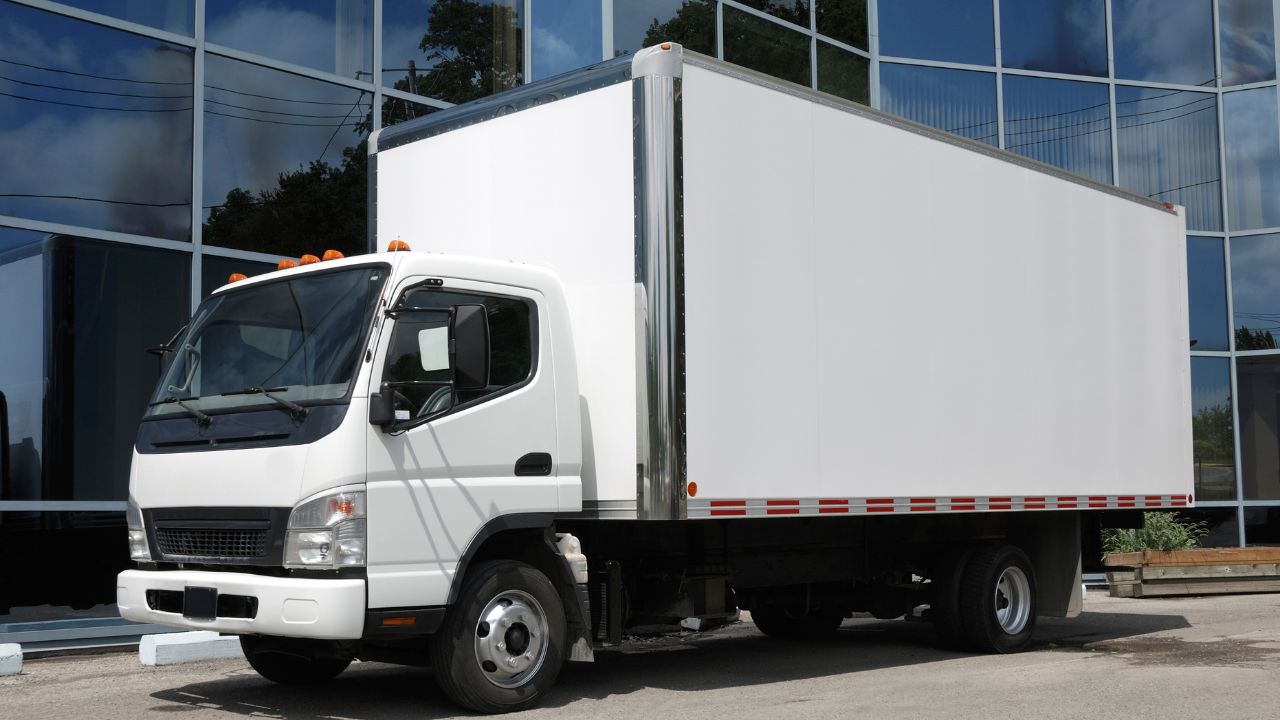
Box truck insurance is a specialized subset of commercial auto insurance designed for straight trucks. It covers Class 3–6 vehicles and two-axle trucks without trailers operating in delivery, moving, contractor, and food-service operations. California's Vehicle Inventory and Use Survey identifies 211,254 two-axle trucks without trailers statewide, representing the core box truck proxy. Every box truck used for commercial purposes in California requires at a minimum a valid commercial auto liability policy.
Commercial auto liability covers third-party bodily injury and property damage and is required by California law. Commercial auto physical damage covers collision, comprehensive, and fire or theft for your truck. Motor truck cargo covers goods in transit and may include debris removal, sue and labor, earned freight, and reefer breakdown. Uninsured Motorist Bodily Injury pays for injuries caused by an uninsured at-fault driver, while Underinsured Motorist responds when coverage is insufficient. Uninsured Motorist Property Damage covers vehicle damage from an uninsured driver only when collision coverage is not present.
Box trucks with permanently attached equipment require stated-amount physical damage coverage that accurately reflects those additions. Liftgates, refrigeration units, racks, and shelving must be documented, or the insured receives less than the repair cost. Box truck operations often include delivery to residential and commercial addresses, creating liability exposure that differs from highway-only freight haulers. Understating the vehicle's actual value creates claim shortfalls, making accurate valuation one of the most critical decisions operators face.
California's box truck commercial insurance market is estimated at approximately $1.15 billion in 2024, representing 19.2% of the state's commercial auto premium base. The market has grown at an estimated combined five-year CAGR of approximately 8.64%, driven by freight density and rising liability severity. California's box truck market is projected to reach approximately $1.74 billion by 2029 at current growth rates. Operators who understand what drives their premium are better positioned to manage it in an expensive and growing market.
Larger trucks cause more severe losses and require higher liability limits, directly increasing premium costs. Urban geography creates congestion, higher theft rates, greater claim severity, and more active litigation across Southern California markets. Driver violations and crashes directly increase expected loss performance and premium, while new ventures lack proven safety history. Operating radius matters significantly because more miles and interstate operations create more exposure for underwriters to price.
The LA–Long Beach–Glendale and Riverside–San Bernardino–Ontario metros together account for approximately 48.9% of California truck driver jobs. Southern California is one of the most active and most expensive commercial auto markets in the country. Operators based in these metros should expect premiums that reflect the local risk environment and work with specialists who understand it. SoCal Truck Insurance is headquartered in Downey, CA, and serves the Southern California markets that operators work in every day.
Industry customer satisfaction data shows overall satisfaction in commercial auto at approximately 697 out of 1,000 points. Customers with the highest trust levels score approximately 877, a gain of 180 points over the average. Personalized communication produces a trust score of approximately 761, compared to 655 without personalization, demonstrating the value of dedicated service. Understanding a customer's business produces a +37 percentage point renewal lift, while improved policy understanding adds +33 points to renewal rates.
Industry data shows 36% of commercial auto customers faced premium increases in 2024, driving active quote-shopping behavior. Forty percent of small-business commercial auto buyers pay under $200 per month, while 29% pay $200–$400 per month. The overall small-business commercial auto average is approximately $245 per month, but box truck-specific buyers average approximately $909 per month. Comparing insurance quotes effectively requires understanding how coverage construction affects both price and protection.
Approximately 78.3% of surveyed California commercial establishments have 0–9 employees, while approximately 21.7% have 10 or more employees. Small fleets represent 23.5% of commercial vehicles, while large fleets represent 76.5%, creating different purchasing dynamics. Small operators and owner-operators represent the majority of box truck insurance buyers, making coverage and pricing decisions realistic for that operating scale. SoCal Truck Insurance serves independent operators and small fleets who face the budget realities of this market segment.
California minimum liability requirements are $300,000 for certain sub-10,001-pound household goods operations and $750,000 to $5,000,000 for trucks over 10,000 pounds. Legal minimums are a compliance floor but are not necessarily adequate for actual exposure in California's litigation environment. Broker and shipper contracts frequently require higher limits than legal minimums, making understanding liability coverage essential for contract-ready operations. Operators should evaluate limits based on actual exposure, not just regulatory minimums.
Physical damage coverage requires the operator to establish a stated amount based on vehicle age, condition, and market value. Permanently attached equipment, including liftgates, refrigeration units, racks, shelving, and upgrades, must be accurately documented in the stated amount. An inaccurate stated amount produces a claim shortfall, the most common form of underinsurance in box truck policies. Physical damage is especially important for financed trucks because lenders typically require it as a loan condition.
Most practical box truck insurance plans include $100,000 in cargo limits to meet shipper and contract requirements. Cargo coverage can be written as a standalone policy or as an endorsement to the commercial auto policy. UMBI and UIM coverage are important in California, given the state's high rate of uninsured motorists, and should not be considered optional. California has one of the highest uninsured motorist rates in the country, making UM/UIM coverage particularly relevant for complete protection.
Operators can legitimately reduce premiums by accurately representing their actual usage patterns, including local versus regional operations. Daily versus occasional use and residential versus commercial routes affect exposure and pricing models used by underwriters. Maximizing coverage value requires accurate disclosure because misrepresentation creates coverage voids that appear only after a claim. Honest communication about operating patterns helps match policy structure to actual risk.
Higher deductibles reduce premiums but increase out-of-pocket costs after a claim, creating a tradeoff for operators. Operators with stable cash reserves can often benefit from higher deductibles without operational disruption during repairs. Fleet credits are available for operators with multiple vehicles, and deductibles and fleet credits should be evaluated together. New ventures with limited cash reserves should be cautious about high-deductible structures that impair recovery speed.
Understating vehicle value produces claim shortfalls on physical damage coverage, leaving operators financially exposed after a total loss. Ignoring cargo documentation requirements can result in claim denial or reduced payout when freight is damaged or stolen. Carrying liability-only on a financed truck creates major balance-sheet exposure if the truck is totaled without physical damage coverage. SoCal Truck Insurance agents review policies for these exact issues, catching mistakes before a claim reveals them.
Underwriters evaluate box truck risk differently across liability, physical damage, and cargo, requiring accurate business disclosure for proper pricing. Liability underwriting focuses on limits, operating radius, cargo type, and driver history as primary rating factors. Physical damage underwriting requires stated-amount accuracy, deductible selection, and equipment documentation to avoid claim shortfalls at settlement. Accurate business disclosure is essential to getting the insurance coverage that actually responds at claim time rather than creating gaps.
The most frequent structural gaps include understated vehicle values, excluded commodities, and endorsement mismatches across coverage types. Cargo coverage often excludes jewelry, contraband, undocumented freight, and certain pharmaceuticals, creating claim-denial risk if not reviewed. Gaps between coverage types occur when operators assume that liability protects the truck or that cargo protects third-party property damage. Small business owners particularly need clear structural guidance because administrative capacity is limited and mistakes are costly.
Misstating your operating geography, vehicle value, cargo type, or route radius can void coverage or produce inadequate claim payments. Accurate disclosure is both a compliance requirement and a protection for the operator against policy rescission or denial. Working with a specialist agent who asks the right questions helps ensure your policy is built on accurate information. SoCal Truck Insurance agents conduct thorough coverage consultations, not just quote comparisons, to ensure proper policy construction.
Budget plans for older local trucks typically cost approximately $2,772–$7,200 per year, offering basic liability suitable for low-value local operations. Mid-tier regional owner-operator plans cost approximately $6,600–$13,200 per year and include liability plus physical damage or cargo coverage. Premium plans for new venture urban 26-foot operations cost approximately $18,000–$31,200 per year, providing a full coverage stack with higher limits. These ranges set realistic expectations while reinforcing that actual rates depend heavily on individual risk factors and operating profiles.
Reefer and food service 26-foot operations typically cost approximately $8,400–$16,800 per year, reflecting refrigeration and spoilage exposure. Hazmat box-configured units cost approximately $12,000–$24,000 or more per year due to elevated liability minimums and severe-hazard exposure. Seasonal operations require specialized attention because usage patterns change and coverage must adjust to maintain proper protection. SoCal Truck Insurance has experience placing coverage for specialty box truck operations, including reefer, food service, and hazmat-configured units.
The combination of route type, cargo, truck size, driver history, and fleet size affects underwriting decisions and final premium. New ventures with limited operating history face higher premiums because underwriters lack loss data and safety records to price accurately. Working with a specialist who can navigate multiple carriers gives operators a meaningful advantage in securing competitive rates and proper coverage. California commercial truck insurance requires expertise because the regulatory environment, litigation exposure, and market concentration create complexity that most general agents cannot address.
California box truck insurance is complex, expensive, and requires a complete and accurate coverage stack to provide real protection. Commercial trucking insurance decisions must account for liability severity, asset values, cargo exposure, and uninsured motorist risk across urban delivery environments. Truck insurance policies built on incomplete disclosure or understated values create claim shortfalls that appear only after loss occurs. SoCal Truck Insurance helps box truck operators build coverage that protects their business, not just satisfies the minimum regulatory requirement.
At SoCal Truck Insurance, we help box truck operators in Southern California build coverage that protects their business. Our agents shop across multiple carriers, review your coverage for gaps, and assign you a dedicated specialist available 24/7. Over 25 years of serving California's commercial trucking market, we know what box truck operators actually need. Request a free quote today and get coverage you can count on.