Interstate truck drivers operating in California carry dual compliance responsibilities beyond basic liability minimums. Federal FMCSA regulations establish baseline filing and coverage obligations for commercial vehicles crossing state lines, while California's motor-carrier permit system adds state-specific requirements for liability, workers' compensation, and proof-of-coverage documentation. Understanding these layers prevents authority suspension, contract disqualification, and uninsured exposure.
This checklist organizes federal insurance requirements, California state-specific obligations, and recommended coverage by operator type. Each section includes filing procedures, minimum limits, and coverage decisions affecting compliance and financial protection.
Key Takeaways
Interstate operators must maintain FMCSA-compliant liability coverage with active filings tied to their operating authority. Requirements apply to for-hire property carriers, hazardous-materials haulers, and household-goods movers operating vehicles of 10,001 pounds GVWR or greater.
Interstate for-hire property carriers operating vehicles of 10,001 pounds GVWR or more must file $750,000 bodily injury and property damage liability with the FMCSA. This filing must remain active without lapses, as authority suspension occurs when FMCSA vs California insurance requirements are not simultaneously maintained. The $750,000 minimum represents the federal floor, but most brokers and shippers require $1,000,000 in practice. Confirm contractual obligations before assuming the minimum satisfies customer requirements.
Hazardous materials carriers must carry $1,000,000 to $5,000,000 in liability depending on commodity classification and risk tier. Carriers transporting explosives, poison gas, or radioactive materials face the $5,000,000 federal minimum. Household goods carriers must carry $750,000 liability plus a $5,000 per vehicle and $10,000 per occurrence cargo filing. Confirm your commodity classification before assuming a standard minimum applies.
All interstate operators must file proof of insurance with the FMCSA using the MCS-90 endorsement attached to their commercial truck insurance in California policy. Insurance filings are tied to your operating authority, and coverage gaps trigger authority suspension. California-based interstate operators carry both federal and state filing obligations simultaneously. SoCal Truck Insurance manages FMCSA and California DMV filings on behalf of clients, ensuring renewal dates and endorsements remain current.
California imposes intrastate insurance requirements separate from federal rules, creating a second compliance layer for operators working within state borders. Requirements apply through the California DMV motor-carrier permit system and include liability minimums, workers' compensation obligations, and umbrella policy considerations.
California intrastate operators must maintain commercial liability coverage within a statutory range of $300,000 to $5,000,000, depending on vehicle weight and cargo type. Proof of coverage must be filed through the California DMV motor-carrier permit system and kept current throughout the permit period. The specific minimum depends on vehicle classification, route designation, and commodity hauled. Failing to maintain a valid DMV filing puts your California operating permit at risk and can disqualify you from state contract work.
California law requires any business with one or more employees to carry workers' compensation insurance. Owner-operators without employees should evaluate occupational accident insurance as a personal injury protection alternative, though it provides narrower coverage than statutory workers' compensation. Solo operators remain responsible for their own medical and disability costs unless they carry occupational accident or health coverage.
California's litigation environment makes umbrella coverage a practical necessity, particularly in Southern California. An umbrella policy extends liability limits beyond your primary coverage for catastrophic loss scenarios involving severe injury or multiple claimants. State-specific endorsements may be required depending on your freight type, shipper contracts, or different types of commercial trucks and insurance coverage that you operate. SoCal Truck Insurance agents review umbrella needs during every coverage consultation to ensure limits align with California's high-severity exposure.
Use this checklist to confirm your coverage stack meets federal, state, and contract requirements before operating interstate routes in California. Each item addresses a specific compliance or protection gap.
[ ] Primary liability insurance filed with FMCSA, meeting the $750,000 minimum for interstate property carriers
[ ] Increased limits confirmed if hauling hazardous materials, with $1,000,000 or $5,000,000, depending on commodity
[ ] Household goods cargo filing in place if applicable, including the $5,000 minimum per vehicle requirement
[ ] Liability limits reviewed against broker and shipper contract requirements, as most require $1,000,000
[ ] Motor truck cargo coverage in place and matched to the actual freight value you transport
[ ] Cargo limits verified against shipper and broker contract requirements, including any per-load minimums
[ ] Coverage gaps around trucking cargo insurance reviewed and addressed, particularly for high-value or time-sensitive freight
[ ] Commodity exclusions confirmed, as some cargo types require separate endorsements
[ ] Collision and comprehensive coverage in place for your truck and trailer to protect against theft and accidents
[ ] Coverage amount reflects current truck age, mileage, and market value rather than original purchase price
[ ] Financed or leased trucks confirmed to meet the lender's physical damage requirements
[ ] Stated amount accurately accounts for permanently attached equipment, sleeper boxes, and custom installations
[ ] Bobtail or non-trucking liability in place if leased to a motor carrier for personal and non-dispatch use
[ ] Trailer interchange coverage confirmed if hauling trailers you do not own under interchange agreements
[ ] Motor truck general liability reviewed for operations at customer sites, terminals, or loading docks
[ ] Umbrella policy limits reviewed against primary liability exposure and California litigation severity
[ ] Workers' compensation is in place if you have one or more employees, as required by California law
[ ] Occupational accident insurance evaluated if operating as a solo owner-operator without employees
[ ] MCS-90 endorsement on file with FMCSA for federal interstate authority compliance
[ ] California DMV motor-carrier permit proof of insurance filed and current for intrastate operations
[ ] All policy filings confirmed as active with no lapses or pending renewals
[ ] Renewal dates tracked to prevent coverage gaps that trigger compliance violations
Your coverage requirements depend on whether you operate under your own authority or are leased to a motor carrier. Use the checklist matching your operating model.
[ ] Full primary liability coverage with active FMCSA filing and semi truck insurance requirements in California compliance
[ ] Motor truck cargo coverage in place matched to freight value and shipper contract minimums
[ ] Physical damage coverage for your truck and trailer, with limits reflecting current market value
[ ] Motor truck general liability reviewed for terminal, warehouse, and customer-site operations
[ ] Umbrella or excess liability evaluated to extend coverage beyond primary limits for catastrophic scenarios
[ ] Workers' compensation or occupational accident coverage confirmed based on employee status
[ ] All filings are current with both FMCSA and California DMV for dual compliance maintenance
[ ] Primary liability coverage provided by the motor carrier confirmed in writing
[ ] Non-trucking liability or bobtail coverage in place for personal and non-dispatch use
[ ] Trailer interchange coverage confirmed if hauling non-owned trailers under lease on vs own authority for cheaper truck insurance arrangements
[ ] Cargo coverage gaps reviewed, as the carrier's policy may not cover all loss scenarios or deductibles
[ ] Occupational accident or health insurance evaluated
[ ] Physical damage coverage confirmed if the truck is financed or high-value
Interstate trucking coverage extends beyond basic liability and cargo requirements to address specialized exposures affecting risk transfer, contract compliance, and financial stability.
Certain freight types and equipment configurations require endorsements that standard policies exclude or limit. Refrigerated trailers, tanker operations, and specialized hauling often need inland marine or pollution endorsements. Temperature-controlled cargo may require reefer breakdown coverage to protect against spoilage losses. Confirm your policy includes or endorses coverage for the specific equipment and commodities you transport.
Medical payments coverage addresses immediate medical expenses for you and passengers after an accident, regardless of fault. Uninsured and underinsured motorist coverage protects you when the at-fault driver lacks adequate insurance. California's high proportion of uninsured drivers makes this coverage particularly important, as common causes of commercial trucking claims often involve third parties with insufficient liability limits. These coverages fill gaps in your health insurance.
Physical damage coverage repairs your truck after a loss, but does not replace lost income during repairs. Downtime coverage or business interruption endorsements pay a daily or weekly benefit while your truck is out of service. This protection becomes critical when repair delays stretch weeks or when you operate a single truck as your sole income source. Evaluate whether your cash reserves can absorb 30 to 60 days of zero revenue.
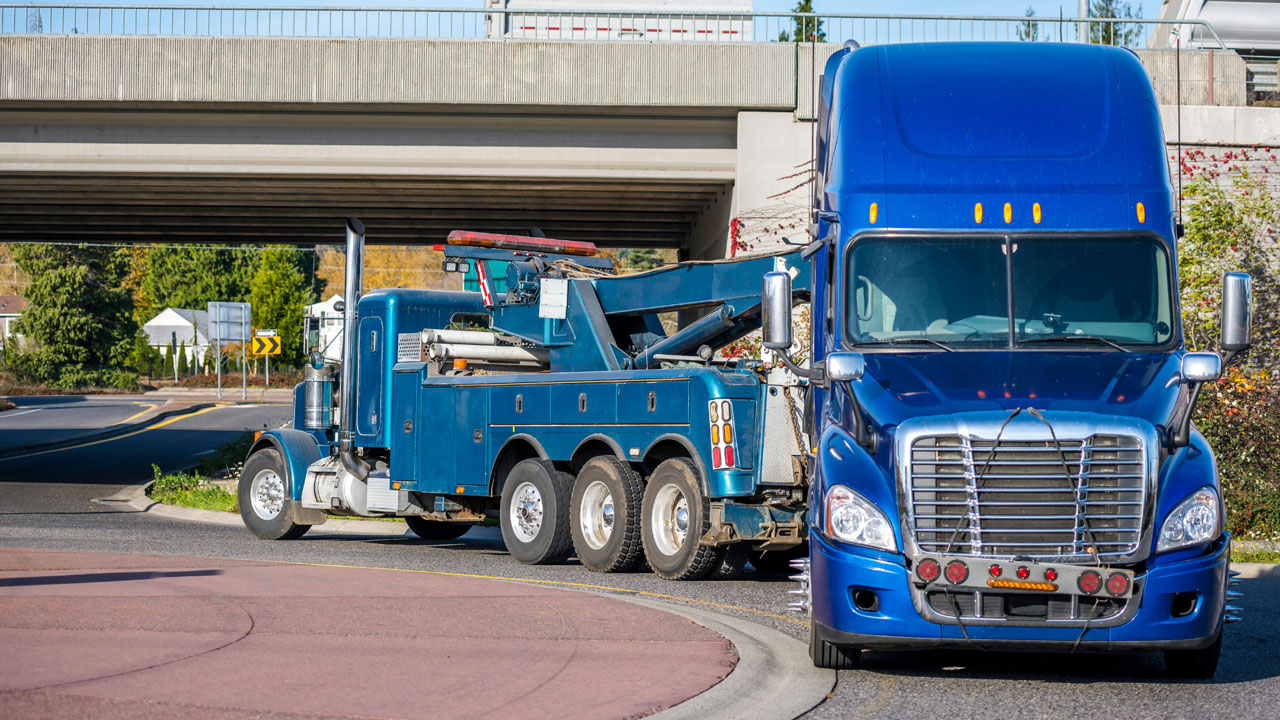
Rental reimbursement coverage pays for a replacement truck while yours is being repaired after a covered loss. Towing and roadside assistance coverage addresses breakdowns, flat tires, and mechanical failures. These coverages reduce operational downtime and prevent out-of-pocket expenses for emergency services. Confirm daily rental limits and towing reimbursement caps align with actual costs in your operating region.
Interstate operators based in California must coordinate filings with both federal and state agencies to maintain operating authority. FMCSA requires the MCS-90 endorsement for interstate commerce, while California DMV requires separate proof of insurance for motor-carrier permits. A lapse in either filing triggers authority suspension, contract disqualification, or permit revocation.
The MCS-90 endorsement guarantees your insurance carrier will pay third-party bodily injury and property damage claims up to the required federal minimum. This endorsement protects the public rather than the insured, meaning your carrier pays the claim and then pursues reimbursement from you if coverage did not apply. The MCS-90 does not expand your policy coverage; it creates a federal-guarantee mechanism. Work with an agent who understands how the endorsement interacts with your underlying policy.
California intrastate operators file proof of insurance through the DMV motor-carrier permit system using form MCP-65 or electronic filing. The filing must show liability limits within the statutory range for your vehicle class and commodity type. Renewals must occur before expiration to avoid permit suspension and administrative penalties. Coordinate renewal dates with your insurance policy to prevent gaps.
Interstate operators often maintain multiple policies and filings with different renewal dates. FMCSA filings, California DMV permits, cargo policies, and physical damage coverage may renew on separate schedules. Use a centralized tracking system or work with an agent who monitors renewal dates. Missing a single renewal can suspend your authority, cancel your permit, or leave you uninsured during active operations.
Interstate trucking coverage and California commercial truck insurance premiums vary based on operating radius, cargo type, safety history, equipment value, and claims experience. Understanding these key factors that impact truck insurance quotes in California helps you manage costs without sacrificing necessary protection.
Interstate operators face higher premiums than local haulers due to increased mileage, exposure to multiple jurisdictions, and highway-speed severity. Long-haul operations crossing multiple states create additional underwriting risk compared to regional routes. Accurately classify your operating radius on your application, as misrepresentation can void coverage. Confirm your radius designation matches actual dispatch patterns.
Higher deductibles reduce premiums but increase your retained loss after a claim, affecting cash flow and repair timelines. Collision deductibles of $1,000, $2,500, or $5,000 offer meaningful premium savings but require adequate cash reserves. Evaluate your maintenance costs, operating margins, and emergency fund before selecting a deductible based solely on monthly savings. Older trucks with higher maintenance costs may benefit from lower deductibles.
Carriers with formal safety programs, driver training, telematics systems, and clean loss histories qualify for premium discounts. Dashboard cameras, electronic logging devices, and ADAS technology reduce claim frequency and severity, which insurers reward through lower rates. Document your safety investments and provide evidence of driver training, vehicle inspections, and maintenance records during underwriting. These loss-control measures reduce premiums over time while improving operational safety.
Even properly insured operators often carry gaps that create uninsured exposure during specific scenarios. Gaps typically arise from exclusions, sublimits, or misunderstandings about what policies actually cover.
Primary liability covers bodily injury and property damage to third parties, but does not cover damage to the freight you are hauling. Cargo coverage requires a separate policy or endorsement with its own limit, deductible, and exclusions. Many operators assume their liability policy includes cargo, creating uninsured exposure when freight is damaged, stolen, or lost. Confirm your cargo coverage matches the shipper contract requirements and the actual freight value.
Leased owner-operators often confuse bobtail coverage with primary liability, but they serve different purposes and apply during different scenarios. Bobtail or non-trucking liability covers you when operating without a trailer or outside dispatch, such as personal use or deadheading. Primary liability covers you under dispatch while hauling freight. Gaps occur when operators assume the carrier's primary liability extends to all scenarios.
Standard physical damage policies cover the truck you own, but typically exclude trailers you haul under interchange or lease agreements. Trailer interchange coverage addresses this gap by covering non-owned trailers while in your possession. Operators hauling customer-owned or leased trailers without interchange coverage assume full financial responsibility for damage or theft. Confirm coverage applies to all trailers you operate.
Owner-operators face unique insurance decisions that balance regulatory compliance, contract obligations, and financial protection. Decisions vary based on whether you operate under your own authority or lease to a motor carrier.
Operators with their own MC number carry full responsibility for liability, cargo, filings, and all optional coverages. You must maintain FMCSA and California DMV filings, purchase motor truck cargo coverage, and evaluate physical damage, general liability, umbrella, and workers' compensation. Your coverage decisions directly affect customer acceptance, contract eligibility, and financial exposure. Budget for a full protection stack rather than minimum liability alone, as brokers and shippers require proof of higher limits before awarding loads.
Leased owner-operators rely on the motor carrier for primary liability under dispatch, but significant gaps remain. You need bobtail coverage for non-dispatch use, physical damage for your truck, and potentially supplemental cargo coverage for deductibles or exclusions. Confirm in writing what the carrier's policy covers and what remains your responsibility. Many leased operators discover gaps only after a loss.
Solo owner-operators without employees avoid California workers' compensation requirements but should evaluate occupational accident insurance for medical and disability protection. Operators with one or more employees must carry workers' compensation under California law, which adds significant cost but protects against employee injury claims. Fleet operators face additional exposures related to hiring, supervision, and vicarious liability, requiring broader coverage limits and endorsements.
Interstate operators who expand their fleet, change commodity types, or add employees must update coverage and filings to maintain compliance. Growth creates new exposures that existing policies may not address.
Each truck and trailer you add must be scheduled on your policy and reported to FMCSA and the California DMV. Failure to report new equipment creates gaps in coverage and filing compliance. Provide your agent with VIN numbers, equipment values, and intended use for each vehicle before placing it in service. Confirm your liability, cargo, and physical damage limits remain adequate as your fleet grows.
Switching from general freight to hazardous materials, household goods, or specialized cargo changes your insurance requirements and filing obligations. Expanding your operating radius from regional to long-haul affects premium, underwriting, and contractual obligations. Notify your agent before changing commodity types or operating patterns to ensure your coverage and filings remain compliant. Retroactive coverage adjustments can trigger premium surcharges or coverage disputes.
Hiring your first employee triggers California workers' compensation requirements and creates new liability exposures related to supervision and employment practices. Update your coverage to include workers' compensation, hired and non-owned auto liability, and potentially employment practices liability. Confirm your general liability policy includes employee-related claims.
Running interstate routes in California means carrying both federal and state compliance responsibilities, and the consequences of a gap are serious. At SoCal Truck Insurance, our specialists have helped owner-operators and drivers get their truck insurance coverage right for over 25 years.
We shop your coverage across multiple carriers, handle your FMCSA and California DMV filings, and assign you a dedicated agent who is available 24/7. Our team understands the difference between minimum compliance and adequate protection, and we help you build a coverage stack that matches your operating model, freight type, and budget.
Whether you operate under your own authority or lease to a motor carrier, we confirm every filing, endorsement, and limit before you roll. Contact us today to request a free quote and make sure your coverage stack is complete before you operate.