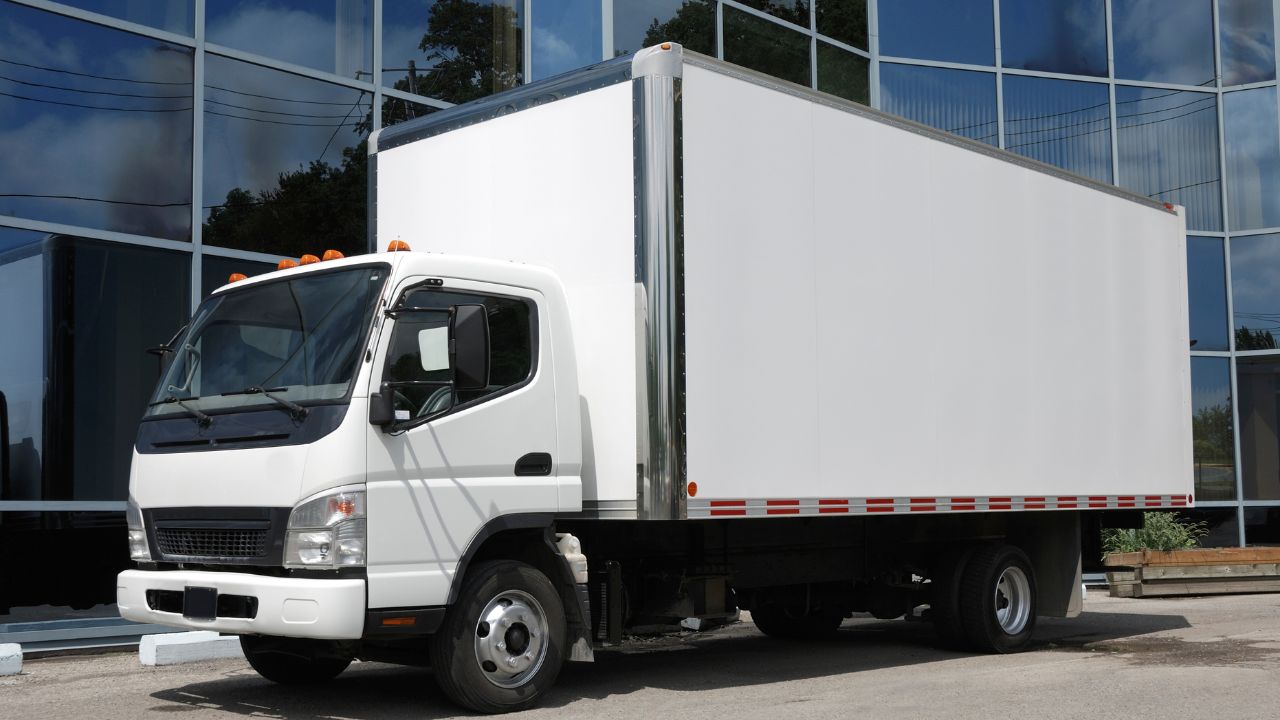
California delivery and moving companies need box truck insurance that satisfies regulatory requirements and operating risks. A policy must cover liability, cargo, physical damage, and business exposures while meeting Motor Carrier Permit proof-of-insurance rules.
Below, you'll find what California's Motor Carrier Permit rules require, which coverages fit delivery versus moving operations, and how to prepare for an accurate quote.
Key Takeaways
Box truck insurance is a package of commercial coverages protecting the truck, goods inside, and business liability from delivery or moving operations. A single accident, cargo loss, or customer injury without proper coverage can shut down operations.
Insurance determines whether a business can access contracts, terminals, or delivery platforms, since warehouses, brokers, and commercial clients often require specific liability limits and certificate forms before allowing a truck on premises.
Box truck insurance addresses collision liability, cargo loss or damage, customer-property exposure, and loading-zone incidents, from bodily injury and property damage to stolen or damaged cargo.
Customer-site operations create risks beyond the vehicle, since drivers entering homes, apartments, or job sites can cause property damage or bodily injury allegations. General liability coverage protects the business when incidents happen outside the cab.
Delivery businesses using box trucks to transport retail goods, appliances, parcels, or contractors' tools need commercial truck insurance, from Amazon-style delivery and furniture delivery to courier routes, local moves, and contractor supply runs.
Moving companies hauling household goods face heightened consumer-property exposure and different regulatory considerations. Whether operating one 16-foot local box truck or a fleet of 26-foot trucks, California requires proof of liability insurance.
California's Motor Carrier Permit program requires proof of insurance before issuance, with required limits varying by vehicle weight and cargo type. Meeting the minimum does not guarantee coverage for the highest contract exposure.
Delivery platforms, warehouses, brokers, property managers, and commercial clients may require specific limits and certificate forms. Understanding liability coverage for your box truck insurance helps align the policy with regulator and contract requirements, since missing forms or endorsements can cost a business access to terminals or delivery routes.
California truck insurance typically includes primary auto liability, physical damage, motor truck cargo, and truckers general liability, each protecting a different exposure.
| Coverage Type | What It Protects | Who Typically Needs It |
| Primary Auto Liability | Bodily injury and property damage from truck operations | Required for all MCP holders |
| Physical Damage | Collision, theft, fire, vandalism, or weather damage to the truck | Financed, leased, or newer trucks |
| Motor Truck Cargo | Loss, damage, or theft of goods being hauled | Delivery and moving companies |
| Truckers General Liability | Property damage or injury during loading, unloading, or customer-site work | Businesses entering homes, warehouses, or job sites |
Primary liability satisfies regulatory minimums, cargo and general liability address goods and customer-site incidents, and physical damage protects the truck itself. The right combination depends on truck value, cargo type, and contract requirements.
Primary auto liability protects bodily injury and property damage liability from truck operations. It is the foundation coverage required for California Motor Carrier Permit proof of financial responsibility.
California requires different limits depending on truck GVWR and cargo type, ranging from $300,000 to $750,000 combined single limit. The full breakdown by weight class appears in the table below.
Physical damage is collision and comprehensive protection for the owned or financed box truck, covering repair or replacement costs from accidents, theft, fire, vandalism, or weather. It protects the asset, not third-party claims.
Lenders and lessors typically require physical damage coverage on financed or leased trucks. Factors that affect your box truck insurance premiums include truck value, age, and deductible selection.
Motor truck cargo covers loss, damage, or theft of goods being hauled, protecting the business when appliances or household goods are damaged or stolen in transit. Limits should reflect the highest realistic exposure, not average load value.
Truckers general liability covers non-auto exposures such as premises and operations, loading and unloading allegations, and customer-site incidents, protecting the business when equipment or a dolly damages a floor or wall.
California DMV Motor Carrier Permit rules set mandatory insurance minimums that vary by truck GVWR and cargo type, and new carriers must provide proof of insurance before the permit is issued.
Interstate operations add federal financial-responsibility requirements on top of California rules, and crossing state lines can mean higher limits or additional filings that carriers should plan for to avoid delays.
The MCP is the Motor Carrier Permit required by the California DMV for many commercial trucking operations, and the DMV will not issue it until the carrier submits acceptable insurance documentation.
Insurance proof typically includes a certificate of insurance or a filing from an authorized insurer. CA legal requirements for commercial truck insurance outline the documentation and filing obligations.
California liability insurance varies from $300,000 to $5,000,000 combined single limit depending on vehicles and property transported. The table below breaks down minimum limits by truck weight and cargo type.
Federal rules apply to interstate for-hire operations carrying property in vehicles 10,001 pounds GVWR or more, with a $750,000 minimum. CSL, or combined single limit, means one dollar amount applies per occurrence regardless of claimant count.
| Truck GVWR | Cargo Type | Minimum Liability Limit Required |
| 10,000 lbs or less | Property (non-hazmat), for-hire only | $300,000 combined single limit |
| 10,001 lbs or more | Property (non-hazmat) | $750,000 combined single limit |
| 10,001 lbs or more, interstate for-hire | Property (non-hazmat) | $750,000 federal minimum |
| Any GVWR | Household goods cargo | $5,000 per vehicle / $10,000 per occurrence |
The DMV MCP application requires proof of workers' compensation insurance or a signed exemption. Carriers using employees, helpers, movers, or loaders must address labor coverage, and misclassifying workers creates regulatory and liability exposure.
An EPN requester code is required if the carrier employs drivers with certain CDL or endorsement profiles, and mail applications require a CA# from CHP before submitting MCP paperwork.
Delivery companies and moving companies both use box trucks, but their insurance needs differ based on cargo values, customer-site exposure, and regulatory obligations.
Commercial insurance for box trucks in California should match the business model, not just the vehicle type. Understanding which exposures matter most helps carriers choose limits and endorsements that protect profitability.
Appliance and furniture delivery operations often carry higher cargo values and customer-home entry exposure. A single load of new appliances can exceed $10,000 in value, making low cargo limits insufficient.
Contractor and supply delivery includes tools, materials, and job-site exposure where general liability relevance increases, and cargo limits should reflect the highest realistic exposure rather than average load value.
Household goods cargo liability operates under different rules than general freight, with federal regulations setting $5,000 per motor vehicle and $10,000 per occurrence.
Moving companies handle consumer property with heightened expectations, and customer belongings can create valuation disputes requiring proper cargo coverage. Entering homes also raises general liability exposure compared to dock-to-dock freight.
Moving companies often use multiple crew members to load and carry heavy items, and each additional worker increases workers' compensation exposure.
Property damage during loading and unloading can occur inside customer homes, hallways, or elevators, and general liability coverage protects the business when a crew member damages flooring, walls, or doorways while moving furniture.
Accurate quotes require detailed information about the truck, cargo, radius, drivers, and contract obligations, which underwriters use to price and structure coverage.
Buyers should know whether the truck is financed or leased, who will drive, and which clients require certificates, since incomplete information can lead to coverage gaps or policy cancellations.
GVWR, or Gross Vehicle Weight Rating, is the maximum loaded weight the truck is designed to carry, and it's listed on the door jamb VIN plate, registration, or dealer listing. Box truck sizes range from 12-foot to 26-foot models.
Operation type matters because for-hire delivery, private carriage, and household goods moving face different regulatory and underwriting rules. Underwriters also ask about cargo type, typical load value, and territory served.
Driver history, CDL requirements, and payroll status all affect pricing and compliance. Carriers with multiple drivers must provide MVRs and payroll records, and workers' compensation becomes mandatory once the carrier uses employees.
Misrepresenting driver or labor status can void coverage or trigger audit adjustments that increase premiums retroactively. What factors affect box truck insurance cost in California include driver count, experience, and payroll classification.
Delivery platforms, warehouses, brokers, and commercial clients may require specific limits or forms before allowing a truck on site, and a policy meeting California minimums may still fall short of contract demands.
Carriers should review contract insurance clauses before purchasing coverage, since requesting certificates after issuance can reveal missing endorsements requiring mid-term changes or higher premiums.
Buying insurance after truck purchase, choosing state minimum liability, and misclassifying drivers create coverage gaps and compliance problems. Top mistakes box truck owners make when buying insurance also include ignoring cargo value and confusing general liability with auto liability.
Many buyers focus on price alone without verifying that coverage matches real operating risks, and a cheap policy with low limits or missing endorsements can cost far more after a claim or contract rejection.
California's minimum liability for a 10,001-pound GVWR box truck hauling non-hazmat property is $750,000 combined single limit. That satisfies the DMV but a serious accident can generate claims exceeding it, leaving the carrier personally liable.
Contract requirements often demand higher limits than state minimums, especially for warehouse access or large commercial clients, and the state minimum can limit a carrier's ability to bid on higher-value work.
Treating general liability as a substitute for auto liability or cargo leaves the business exposed, since it covers customer-site incidents but not vehicle accidents. Listing only one driver when multiple people operate the truck can void coverage.
Failing to disclose driver experience, MVR violations, or employment status gives the insurer incomplete underwriting information, and a claim can reveal the policy excludes the driver or is denied for misrepresentation.
Buying a truck before securing insurance can delay operations if coverage does not meet MCP or contract requirements, and a carrier may only then discover financing requires physical damage coverage or the DMV needs higher limits. Arranging insurance first avoids these surprises.
Insurance also affects financing approval, since lenders may require specific coverage types and loss-payee endorsements before approving the loan. Coordinating insurance, financing, and permit applications keeps the business launch on schedule.
SoCal Truck Insurance specializes in commercial truck insurance for California delivery and moving businesses, offering primary auto liability, motor truck cargo, physical damage, and truckers general liability coverage built for box truck operations. With 25+ years serving the trucking industry, the agency helps carriers compare options and prepare the documents needed to operate.
The agency understands California box truck operators face time scarcity, regulations, and contract pressures, and provides quote support, certificate preparation, and guidance on coverage limits and endorsements.
SoCal Truck Insurance provides primary liability coverage to meet DMV MCP and federal requirements, and writes motor truck cargo coverage for delivery and moving companies hauling retail goods and contractor supplies, and physical damage coverage protects financed or owned trucks from collision, theft, fire, and weather loss.
Truckers general liability addresses customer-site exposure, loading and unloading incidents, and business-operation risks outside the vehicle. SoCal Truck Insurance matches coverage to each truck, cargo type, and contract obligation.
SoCal Truck Insurance helps carriers understand MCP insurance proof requirements and prepares certificates of insurance for delivery platforms, warehouses, and commercial clients, including endorsements such as additional insured and waiver of subrogation.
Compliance guidance extends to workers' compensation requirements, EPN requester codes, and federal interstate filings when applicable, so coverage aligns with regulatory and contract obligations before operations begin.
Carriers can contact SoCal Truck Insurance by phone at (888) 531-2855 to request a quote or discuss coverage options. The office is at 8135 Florence Ave #101, Downey, CA 90240.
Before calling, gather truck GVWR, cargo type, route radius, driver details, and contract certificate requirements to speed the process. SoCal Truck Insurance can explain coverage options and prepare certificates for immediate contract or permit needs.
California box truck insurance must satisfy both regulatory and contract requirements while protecting the business from operating risks. Primary auto liability, motor truck cargo, physical damage, and truckers general liability each address a different exposure.
Accurate quotes require detailed information about truck GVWR, cargo type, route radius, driver status, and contract obligations, gathered before contacting an insurer. Avoiding common mistakes such as choosing state minimum liability, misclassifying drivers, or buying insurance after truck purchase protects the business from coverage gaps and compliance problems.
Getting the right box truck coverage starts with a conversation, not paperwork guesswork. Call SoCal Truck Insurance at (888) 531-2855 to speak with a dedicated agent who understands box truck insurance in California. Agents including Irma Perez and Maria Meza work with owner-operators and fleet managers in English and Spanish, with support available 24/7.
Ready to move forward? Get a free quote and share your DOT number, truck type, and route details, or contact SoCal Truck Insurance directly. There is no obligation, and coverage is built around how the business actually operates instead of a one-size template.
California box truck insurance minimums depend on truck GVWR and cargo type. Trucks 10,000 pounds GVWR or less hauling non-hazardous property as a for-hire carrier need a $300,000 combined single limit, while trucks 10,001 pounds or more need $750,000. These limits satisfy the DMV, but many contracts and warehouses require higher coverage.
Box truck insurance premiums in California vary based on truck GVWR, cargo type, route radius, driver history, and coverage limits. A single local delivery truck with one experienced driver typically costs less than a fleet hauling high-value cargo across a wider territory. An accurate quote requires truck, cargo, and driver details specific to the business.
Primary auto liability alone does not cover cargo. Motor truck cargo coverage protects goods against loss, damage, or theft in the truck's custody, and limits should reflect the highest realistic load value rather than an average shipment. Moving companies hauling household goods face separate federal cargo liability rules of $5,000 per vehicle and $10,000 per occurrence.
Delivery companies typically carry retail goods, appliances, or contractor supplies and face cargo and certificate requirements tied to routes and delivery platforms. Moving companies handle household goods, which come with heightened consumer-property expectations, separate federal cargo liability rules, and more general liability exposure from entering homes.
Call SoCal Truck Insurance at (888) 531-2855 or submit a request through the online quote form. Have the truck's GVWR, cargo type, route radius, and driver details ready before calling. The agency serves California delivery and moving businesses in English and Spanish, with support available 24/7.
SoCal Truck Insurance helps California delivery and moving businesses compare coverage options, meet DMV Motor Carrier Permit requirements, and prepare the certificates needed to operate. With 25+ years of experience in the trucking industry, the agency provides personalized service and guidance built around box truck operators.