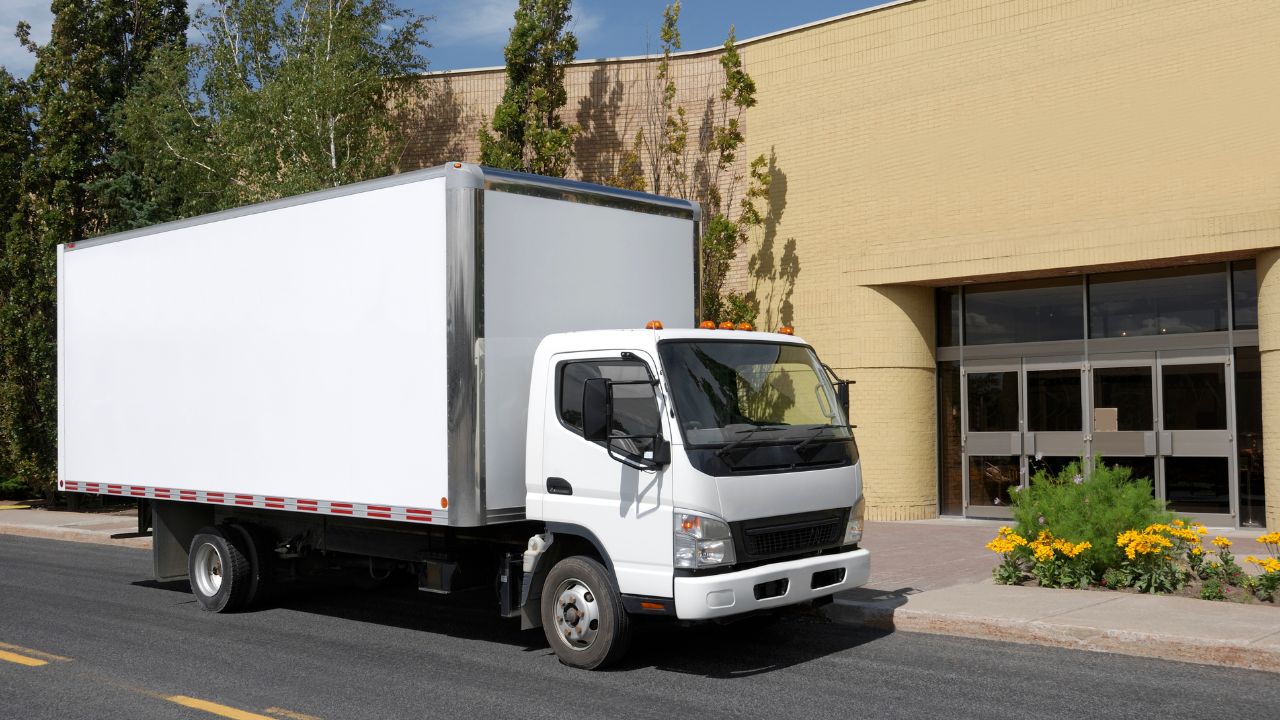
Box truck insurance costs in California reflect a combination of vehicle characteristics, driver history, cargo exposure, and geographic risk factors. California's commercial auto insurance market totaled approximately $5.998 billion in 2024, with box truck insurance representing an estimated 15 to 23 percent of that statewide premium base.
Understanding what drives your premium requires examining how liability, physical damage, cargo coverage, and specialty endorsements respond to different risk profiles. Operators in Southern California face higher premiums than state averages due to congestion, theft rates, and litigation activity.
Key Takeaways
Box truck insurance is a commercial auto coverage stack designed for straight trucks, including Class 3–6 vehicles and two-axle trucks without trailers. California's CA-VIUS data identifies approximately 211,254 two-axle, no-trailer trucks operating in the state.
Core coverage types include commercial auto liability, commercial auto physical damage, and motor truck cargo insurance. Commercial auto liability covers third-party bodily injury and property damage and is required by California law.
Commercial auto liability accounts for approximately 78.7% of California commercial auto premiums, making it the dominant cost driver. Commercial auto physical damage accounts for approximately 21.3% of California commercial auto premiums.
California minimum liability requirements range from $300,000 for certain sub-10,001-pound household goods operations to $750,000 to $5,000,000 for trucks over 10,000 pounds, depending on cargo type. Many practical California commercial truck insurance plans include $100,000 cargo limits as a starting point.
UMBI (Uninsured Motorist Bodily Injury) pays for injuries caused by an uninsured at-fault driver. UIM (Underinsured Motorist) responds when the at-fault party lacks sufficient coverage.
UMPD (Uninsured Motorist Property Damage) covers vehicle damage from an uninsured driver only when collision coverage is not in place. California has a high rate of uninsured motorists, making UM/UIM coverage particularly relevant for California box truck operators.
Truck size, age, mileage, and attached equipment all affect premium calculations. Physical damage coverage requires accurate stated-amount valuation, including vehicle age, current market value, condition, and all permanently attached equipment such as liftgates, refrigeration units, racks, shelving, and upgrades.
Understating vehicle value is a common mistake that creates a gap between what the operator expects to receive after a loss and what the policy will actually pay. A 16-foot local truck with minimal equipment will cost substantially less than a 26-foot urban truck with refrigeration and hydraulic liftgates.
Driver violations and crashes directly affect expected loss performance and premium. New venture status increases underwriter risk perception because new operators lack a proven safety and claims track record.
The average U.S. truck driver age is approximately 55, and experienced operators with clean records generally qualify for better rates. Business profile matters as local versus regional operations, residential versus commercial delivery, and hazardous versus standard cargo all affect commercial truck insurance underwriting decisions.
Southern California's urban environment pushes premiums above national averages due to congestion, theft rates, litigation activity, and claim severity. Cargo type affects both liability exposure and cargo coverage cost, with household goods, refrigerated food, and hazardous materials carrying higher risk profiles.
Coverage level choices reflect the actual risk the operator is accepting, not just premium considerations. Operators who choose higher limits and lower deductibles pay more but gain stronger protection against catastrophic losses.
Industry customer satisfaction data shows overall commercial auto satisfaction at approximately 697 out of 1,000. Customers with the highest trust levels score approximately 877, representing a 180-point gain over the average.
Personalized communication produces a trust score of approximately 761 compared to 655 without personalization. Operators who understand their truck insurance policy and feel their insurer understands their business are measurably more satisfied and more likely to renew.
Industry data shows 36% of commercial auto customers faced premium increases in 2024. Small-business commercial auto buyers average approximately $245 per month, while box truck-specific buyers average approximately $909 per month.
Choosing a policy based on price alone, without evaluating claims service quality, is one of the most common mistakes box truck operators make. A lower premium that produces slow or partial claim payments costs more in the long run.
Industry data shows younger business owners are among the most likely to leave their insurer, reflecting a gap in the personalized service and communication they expect. Small operators with 0 to 9 employees represent the majority of why box truck insurance is essential for small business owners in California, and their coverage needs and budget realities are distinct from those of large fleets.
Budget coverage for an older local truck costs approximately $2,772 to $7,200 per year and includes basic liability appropriate for lower-risk, low-value operations. Mid-tier regional owner-operator plans cost approximately $6,600 to $13,200 per year and include liability plus physical damage or cargo.
Premium coverage for a new venture urban 26-foot box truck costs approximately $18,000 to $31,200 per year and includes the full coverage stack with higher limits. These are industry benchmarks, not quotes, and individual rates depend on the specific factors covered in assess your truck insurance needs to avoid costly mistakes.
A 16-foot local owner-operator typically pays approximately $3,000 to $7,200 per year. A new venture 26-foot urban operator typically pays approximately $18,000 to $31,200 per year.
A reefer or food service 26-foot box truck typically costs approximately $8,400 to $16,800 per year. Hazmat box-configured units typically cost approximately $12,000 to $24,000 or more per year, while general box truck ranges run approximately $2,772 to $11,400 per year for established operators.
Higher deductibles reduce annual premiums but increase financial exposure after a loss. Operators with strong cash reserves can often absorb higher deductibles effectively.
Endorsements such as reefer breakdown, debris removal, and earned freight add meaningful coverage for relatively modest cost in most cases. Evaluate deductibles, limits, and endorsements as a complete package rather than individual line items to cut.
Liability is priced based on exposure including route, cargo type, operating radius, and driver history. Physical damage is priced based on stated vehicle value, and accuracy is essential.
Cargo is priced based on the type, value, and risk profile of goods hauled. Each coverage type has a distinct underwriting logic and a distinct set of questions your agent should be asking.
Liability underwriting focuses on driving history, operating radius, and cargo classification. Physical damage underwriting emphasizes stated amount accuracy, vehicle age, and the value of attached equipment.
Cargo underwriting examines commodity type, coverage limits, and documentation practices. Misclassification in any category affects both premium accuracy and claim outcomes.
Understated vehicle values, misclassified cargo, and inaccurate route disclosure affect both premium accuracy and claim outcomes. These common policy construction mistakes can result in denied claims or unexpected out-of-pocket costs at the worst possible time.
A thorough coverage consultation with a specialist who understands the 5 mistakes causing truck insurance to be more expensive helps identify gaps before a loss occurs. Working with an agent who asks detailed questions about your operation reduces the risk of coverage mismatches.
Cost management in box truck insurance is not about finding the cheapest policy. It is about understanding what drives your premium, building the right coverage stack for your actual operation, and working with a specialist who can navigate the market on your behalf.
Operators who prioritize understanding liability coverage for your box truck insurance alongside physical damage and cargo protection make better long-term decisions than those who focus solely on quoted premiums. Balancing coverage, risk, and service quality produces the most sustainable insurance program.
California box truck operators face a competitive but challenging insurance environment. At SoCal Truck Insurance, our agents help operators understand what they are paying and why, ensuring coverage matches real-world risk.
At SoCal Truck Insurance, our agents help California box truck operators understand what they are paying and why. We shop your coverage across multiple carriers, review your policy for gaps and overexposures, and assign you a dedicated specialist available 24/7.
Over 25 years serving Southern California's commercial trucking market, we help operators get the coverage that fits. Request a free quote today and find out what your box truck insurance should actually cost.