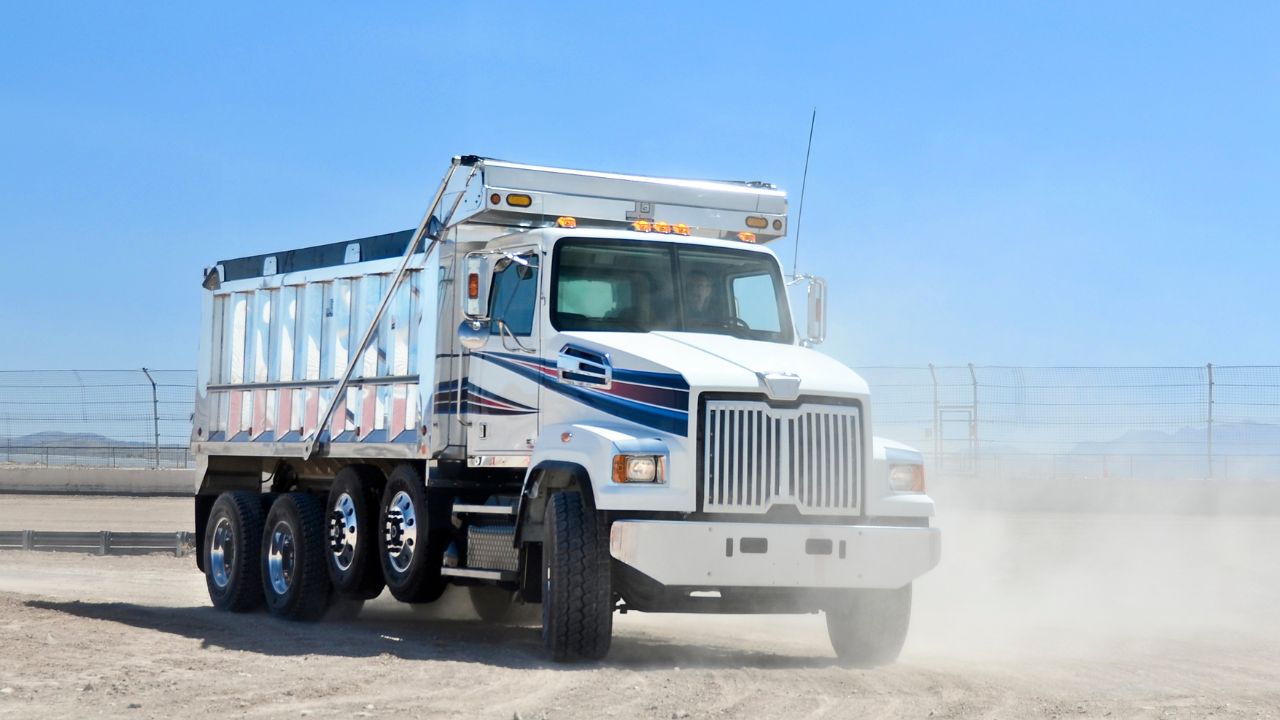
Dump truck insurance protects operators from financial loss caused by accidents, equipment damage, cargo disputes, and third-party liability claims. California's regulatory framework combines federal FMCSA requirements for interstate operations with state-specific DMV motor-carrier permit rules that govern intrastate hauling. Coverage decisions depend on operating model, job site exposure, equipment value, and the specific materials being transported across Southern California construction zones, Central Valley routes, and Bay Area distribution corridors.
Operators often underestimate the gap between legal minimums and adequate protection. A policy that satisfies compliance requirements may still leave significant exposure around material spill liability, backing losses on active job sites, and catastrophic third-party claims in California's high-severity environment. Understanding how coverage types work together helps operators build protection that aligns with how they actually work.
Key Takeaways
Dump truck insurance is a commercial auto policy structured around the specific risks of hauling dirt, gravel, aggregate, construction debris, and other materials. It protects against bodily injury, property damage, equipment loss, cargo disputes, and liability arising from job site operations. Without adequate coverage, a single accident or material spill can create financial consequences that exceed an operator's ability to absorb the loss.
Essential coverage exists because California law and federal regulations require minimum liability limits before operating legally. Contracts with general contractors, project owners, and material suppliers frequently mandate higher limits, additional insureds, and specific endorsements beyond the legal baseline. Coverage gaps discovered after signing a project agreement are expensive to close and can jeopardize site access.
Primary liability covers bodily injury and property damage to third parties and is required for all operators regardless of operating authority or truck size. Motor truck cargo protects against loss or damage to hauled materials, including dirt, gravel, aggregate, and construction debris. Physical damage provides collision and comprehensive coverage for repair or replacement of the tractor and trailer after accidents, rollovers, theft, or weather-related losses.
Bobtail and non-trucking liability fill coverage gaps for leased owner-operators driving without a trailer or off dispatch. Dump truck insurance is typically structured as a commercial auto package, but the right coverage stack depends heavily on your specific operation type and sites.
Dump trucks carry a distinct risk and coverage profile compared to semi-trucks and interstate freight haulers. Coverage priorities shift based on operating environment, cargo type, and regulatory exposure.
The table below shows how adoption rates differ across major coverage categories:
| Coverage Type | Dump Truck | Semi-Truck | Interstate Truck |
| Liability | 100% | 100% | 100% |
| Cargo | ~55% | ~78% | ~82% |
| Physical Damage | ~76% | ~72% | ~70% |
| Specialized Riders | ~49% | ~68% | ~74% |
Cargo coverage adoption is lower for dump trucks because of the materials typically hauled — bulk aggregates, fill dirt, and demolition debris carry different risk profiles than freight. That said, cargo coverage still matters for dump truck operators. Aggregate spills, material loss mid-haul, and contract compliance requirements all create real exposure that goes uncovered without it.
Physical damage adoption runs higher for dump trucks than for other truck types. Construction sites, unpaved roads, and heavy material loads put more wear and stress on equipment, and replacement costs for dump trucks are significant. After 25+ years placing coverage for construction haulers across Southern California, our agents have seen firsthand how quickly an uninsured equipment loss can stall an operation.
Backing losses are one of the most common causes of dump truck damage and liability claims on active job sites. Falling material, including rocks, debris, and aggregate, leaving the truck bed, creates third-party property and bodily injury exposure. Tire and suspension damage accelerates under uneven terrain, rough surfaces, and construction site conditions, increasing the frequency of physical damage claims.
Site congestion involving heavy equipment, workers on foot, and tight maneuvering areas increases accident frequency beyond typical highway operations. These risks are distinct from highway freight operations and require coverage terms that account for job site activity. SoCal Truck Insurance's direct experience with Southern California construction and material hauling operations informs coverage recommendations tailored to these exposures.
California dump truck operators must satisfy both federal FMCSA standards for interstate commerce and state DMV motor-carrier permit requirements for intrastate hauling. The specific minimum depends on vehicle weight, cargo classification, and operating route. Compliance failures can result in permit suspension, fines, and loss of operating authority.
Legal minimums establish the floor, not the ceiling, for adequate protection. California's claim severity environment and contractual requirements from general contractors frequently push required limits higher than statutory minimums. Operators should review what truck insurance is legally required in California before making coverage decisions.
Interstate for-hire property carriers operating vehicles of 10,001 lbs GVWR or more must meet FMCSA minimum liability requirements. The standard FMCSA minimum is $750,000 bodily injury and property damage for non-hazardous freight operations. Hazardous material operations require $1,000,000 to $5,000,000 liability, depending on commodity classification.
Carriers transporting explosives, poison gas, or radioactive materials face a $5,000,000 minimum. Household goods carriers face a $5,000 cargo insurance filing requirement in addition to liability coverage.
California intrastate operators must maintain commercial liability coverage within a statutory range of $300,000 to $5,000,000. Proof of coverage must be filed through the California DMV motor-carrier permit system before operating. The specific required minimum depends on vehicle weight, cargo classification, and operating route.
A lapsed or incomplete filing puts your California motor carrier permit and your ability to operate at risk. SoCal Truck Insurance manages DMV and FMCSA filings for clients as part of the dedicated agent relationship.
Most California dump truck operators hauling non-hazardous materials fall under the $750,000 federal minimum or the California intrastate range, depending on their operating authority. Higher minimums apply when hauling hazardous materials, operating above certain weight thresholds, or meeting specific project-contract requirements. Legal minimums represent the starting point, not a recommendation, given California's claim severity environment.
Contractor and project agreements frequently require higher liability limits than legal minimums. Many general contractors mandate $1,000,000 or more in primary liability plus umbrella coverage before allowing equipment on site.
Coverage variation reflects differences in operating model, equipment value, cargo type, and contractual obligations. Owner-operators running local material hauls face different protection priorities than fleets serving large construction projects. Understanding when optional coverages become essential helps operators avoid gaps that create financial exposure after a loss.
California's diverse freight geography adds complexity. Southern California construction zones, Central Valley agricultural corridors, and Bay Area distribution networks each present distinct risk profiles. Coverage decisions should reflect where and how you actually operate.
Approximately 55% of dump truck operators carry cargo coverage, lower than other truck types, but still significant. Cargo coverage is important when hauling high-value materials, operating under contract, or when material spill liability is a concern. Cargo disputes and financial exposure from material loss can be significant even for operators hauling seemingly low-value loads.
Subcontractor agreements and project contracts may require cargo coverage regardless of the operator's preference. SoCal Truck Insurance helps operators evaluate whether cargo insurance makes financial sense for their specific hauling profile.
Physical damage adoption is higher for dump trucks (~76%) than for other truck types, reflecting the real-world cost of job site wear and damage. Collision and comprehensive coverage protect against repair and replacement costs on equipment that sees heavy daily use. Dump truck repairs are expensive, and a single major loss without physical damage coverage can create a serious financial impact.
Operators with financed or leased trucks typically have physical damage as a lender requirement. Even operators who own equipment outright should evaluate whether they can absorb the full replacement cost of a total loss.
Umbrella coverage extends liability limits above primary coverage for catastrophic loss scenarios on active job sites. General liability endorsements may be required by project owners or general contractors as a condition of site access. Trailer interchange becomes relevant if hauling trailers you do not own under written agreements.
Bobtail and non-trucking liability are essential for leased operators when driving off dispatch. Operators should review their project contracts for specific endorsement and additional insured requirements before signing any agreement.
Dump truck insurance pricing varies by coverage breadth, limits, deductibles, equipment value, driving history, and operating geography. Budget plans satisfy legal minimums but leave significant protection gaps. Premium plans offer higher limits, broader coverage stacks, and endorsements tailored to construction site exposure.
Understanding tier differences helps operators balance affordability with adequate protection. The cheapest policy often becomes the most expensive outcome after a claim if coverage gaps create uninsured losses.
Budget tier plans cost approximately $300 to $499 per month and provide legal minimum liability only. These plans meet basic compliance but leave significant gaps around physical damage, cargo, and catastrophic liability exposure. Mid-tier plans cost approximately $500 to $999 per month and add physical damage or cargo coverage suitable for many established operators.
Premium tier plans cost approximately $1,000 to $1,600 or more per month. They include higher limits, broader coverage stacks, and endorsements, making them the recommended choice for operators on active construction sites or carrying high-value materials.
Higher deductibles reduce monthly premiums but increase the financial impact of each claim. Dump truck operators on active job sites face higher claim frequency, and deductible decisions should reflect this reality. Under-capitalized operators, especially new ventures, should be cautious about high-deductible plans that look affordable but create cash flow risk after a loss.
SoCal Truck Insurance agents help operators evaluate the right deductible level based on their specific operation and financial position. Balancing premium savings against retained risk requires understanding both claim frequency and available cash reserves.
Industry benchmarks show dump truck commercial auto monthly premiums averaging approximately $987. New for-hire specialty trucker policies average approximately $746 per month in industry data. New for-hire transport trucker policies average approximately $954 per month.
Cargo coverage adds approximately $129 per month at industry median rates. General liability adds approximately $51 per month, while workers' compensation adds approximately $650 per month for operations with employees. Individual rates vary based on driving history, equipment, routes, and coverage selections, so operators should request a personalized quote.
Construction and job site exposure create distinct insurance requirements beyond standard highway freight operations. Project contracts frequently impose insurance mandates that exceed legal minimums. Material spill exposure, debris liability, and subcontractor additional-insured requirements shape coverage decisions for dump trucks serving construction sites.
Understanding how California truck laws impact insurance helps operators navigate both regulatory compliance and contractual obligations. Gaps discovered after signing a project agreement can jeopardize site access and create uninsured liability exposure.
Subcontractor additional-insured requirements mean project owners and general contractors frequently require dump truck operators to add them as additional insureds on liability policies. Material spill exposure arises when debris, aggregate, or hazardous material leaves the truck bed, creating third-party property damage and cleanup liability. Project-contract insurance requirements specify minimum limits and coverage types that may exceed standard policy terms.
Operators should confirm contract insurance requirements before signing any project agreement. Gaps discovered after signing are expensive to close and may require policy endorsements, higher limits, or supplemental general liability coverage.
California law requires workers' compensation for any business with one or more employees. Construction-adjacent dump truck work carries elevated employee injury exposure, given the job site environment. Owner-operators without employees should evaluate occupational accident insurance as a personal injury safety net.
Workers' compensation and occupational accidents are separate products with different regulatory treatment. Operators should confirm they have the right coverage for their operating structure before assuming they are protected.
Cargo coverage and general liability interact when hauling loose materials that leave the truck and cause third-party damage. Cargo coverage typically responds to loss or damage to the material itself, while general liability responds to property damage or bodily injury caused by the material. Understanding motor carrier insurance helps clarify which policy responds in different loss scenarios.
Having both coverages in place matters because material spill incidents often trigger multiple policy responses. An incident involving a falling aggregate that damages a parked vehicle may involve both cargo loss and third-party property damage liability.
Dump truck insurance is not one-size-fits-all. Coverage needs depend on operating model, job site exposure, equipment value, and contractual requirements. Legal minimums establish the compliance floor, but adequate protection requires evaluating cargo, physical damage, umbrella, and specialized endorsements based on how you actually work.
California's claim severity environment, construction site congestion, and project-contract mandates push required coverage beyond bare minimums. Operators should protect themselves and their businesses by reviewing their coverage stack annually and confirming that limits, endorsements, and deductibles align with their current operations. Understanding how environmental regulations impact insurance further shapes protection strategies for California-based operators.
At SoCal Truck Insurance, our agents understand the specific risks of dump truck operations in Southern California, from construction site exposure to material hauling liability. We have been protecting operators like you for over 25 years, shopping your commercial truck insurance coverage across multiple carriers to find the right fit.
Request a free quote today and get coverage built for how you actually work.