Key Takeaways
December marks peak freight demand as retailers race to fulfill holiday orders. The combination of compressed delivery windows and surging consumer spending creates unprecedented pressure on commercial fleets.
The holiday peak season spans October through December, with November and December driving the highest freight volumes. Major shopping events—Black Friday, Small Business Saturday, and Cyber Monday—trigger massive spikes in shipment demand. The 2024 season proved particularly challenging, with only 27 days between Thanksgiving and Christmas, five fewer shopping days than in typical years. This compressed timeline intensified December accident frequency as drivers faced tighter deadlines.
Parcel, eCommerce, and last-mile delivery services experience extended demand throughout December. Carriers command premium rates for expedited loads, but the seasonal surge creates critical equipment shortages. Trailers and chassis become scarce resources, forcing fleets to maximize asset utilization. This operational strain increases winter storm exposure as drivers push through adverse conditions to meet delivery commitments. The combination of holiday traffic congestion and equipment constraints sets the stage for elevated claim severity trends throughout the month.
December combines maximum freight demand with minimum road safety conditions. This convergence creates the deadliest month for commercial trucking operations.
The statistics paint a stark picture of December accident frequency. According to the National Safety Council, 32.34% of all trucking accident fatalities occur between November and January, with December recording 382 deaths—the highest of the three-month period. November follows with 368 fatalities, while January accounts for 336 deaths. An FMCSA study confirms that trucking accidents increase approximately 20% during peak holiday periods compared to the rest of the year.
This elevated claim severity trend stems from multiple converging factors. Compressed delivery schedules force drivers onto roads during winter storm exposure when conditions are most hazardous. Holiday traffic congestion adds unpredictability to every route, reducing reaction time and escape options. Meanwhile, criminal organizations exploit the chaos, targeting high-value holiday shipments. The pressure to meet delivery deadlines often overrides risk mitigation planning, pushing drivers to operate in conditions they would normally avoid. When freight demand peaks and weather conditions deteriorate simultaneously, the result is predictably deadly.
Multiple hazards converge in December to create a perfect storm of risk. Winter storm exposure, driver fatigue, and cargo theft each amplify claim severity trends through distinct mechanisms.
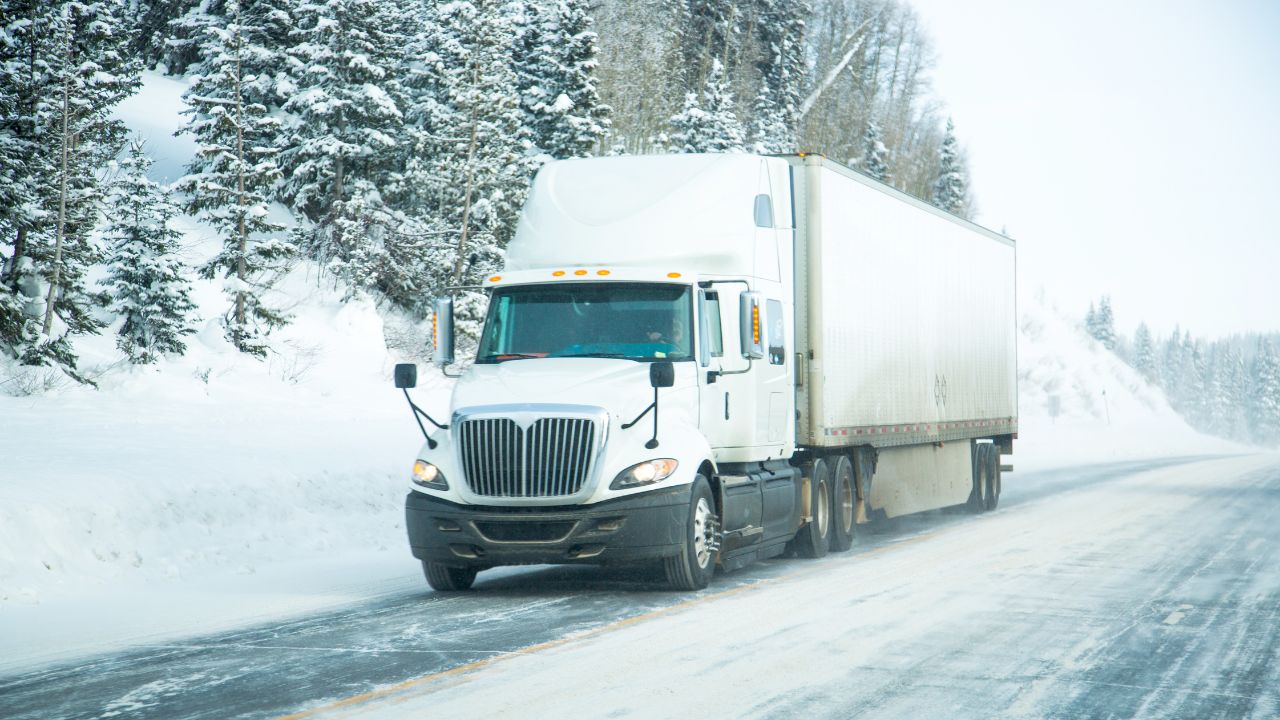
Winter weather drives December accident frequency to annual peaks. Icy roads cause the majority of winter truck accidents, while blizzards reduce visibility to mere feet, eliminating safe stopping distances.
The data reveals severe winter storm exposure nationwide. Twenty-four percent of all weather-related vehicle accidents occur during winter months. According to the USDOT Federal Highway Administration, snowy and icy roads cause an average of 1,836 deaths and 136,309 injuries annually. Regional variations in December accident frequency show concentrated risk areas, with New Mexico leading at 122.1 crashes per 100,000 drivers and Oklahoma following at 112.1 crashes per 100,000 drivers.
| Weather Factor | Impact Statistics | Primary Risk |
| Winter accidents | 24% of weather-related crashes | Reduced traction and control |
| Annual casualties | 1,836 deaths, 136,309 injuries | Loss of vehicle control on ice/snow |
| Leading cause | Icy roads | Complete loss of braking effectiveness |
| Visibility reduction | A few feet in blizzards | Inability to see hazards ahead |
| Highest-risk state | New Mexico: 122.1 crashes/100K drivers | Geographic and weather combination |
| Second-highest risk | Oklahoma: 112.1 crashes/100K drivers | Frequent ice storms |
Driver fatigue becomes critical during peak season when extended hours meet compressed schedules. Federal HOS regulations permit a maximum 11-hour driving shift after 10 consecutive hours off duty, but December's operational pressures push many drivers to these limits daily.
Compressed holiday shopping periods force drivers into natural drowsiness windows—12 a.m. to 6 a.m. and 2 p.m. to 4 p.m.—when circadian rhythms demand rest. Holiday stress compounds physical exhaustion, while delivery deadline pressure encourages speeding and risk-taking behavior. This combination increases both December accident frequency and claim severity trends. Fatigued drivers show impaired judgment equivalent to intoxication, yet the invisible nature of fatigue makes it harder to recognize and address than weather hazards. Effective risk mitigation planning must account for cumulative fatigue effects throughout the season.
Cargo theft spikes during December as high-value shipments flood transportation networks. The 2024 holiday season recorded 3,625 cargo theft incidents across North America—a 27% year-over-year increase—with total losses exceeding $455 million.
December 27th and 29th emerge as peak theft days, with 31 reported incidents each. Annual U.S. cargo theft losses reach $35 billion, with California, Texas, and Florida bearing the heaviest impact. Thieves target vehicle accessories, televisions, and alcoholic beverages—commodities with high resale value and easy disposal. Keith Lewis, VP of Operations at CargoNet, notes: "The increasing sophistication of cargo theft operations has contributed to a steady rise in holiday season incidents." Criminal organizations exploit holiday traffic congestion and reduced facility staffing to strike when detection risk is lowest. Cargo theft directly impacts claim severity trends while forcing fleets to divert resources from other risk mitigation planning priorities. With theft, damage or loss of goods in transit, the motor cargo truck insurance protects carriers and cargo owners from financial losses.
Effective risk mitigation planning requires systematic preparation before the December accident frequency reaches its peak. Fleets that implement comprehensive safety protocols reduce both winter storm exposure and claim severity trends.
Comprehensive safety policies form the foundation of December risk reduction. Electronic Logging Devices (ELDs) monitor driving hours to prevent fatigue-related incidents, while targeted training prepares drivers for winter conditions, including black ice and reduced visibility. Advanced fleet management software provides real-time GPS tracking to monitor routes and respond quickly to emerging hazards. Geofencing technology helps fleets avoid high-risk zones where December accident frequency historically concentrates.
Strategic vehicle rotation spreads wear and tear evenly across the fleet, preventing mechanical failures during peak demand. Proactive hiring of thoroughly vetted temporary drivers ensures adequate staffing without compromising safety standards. These measures collectively address the operational pressures that drive holiday traffic congestion and winter storm exposure. Companies that prioritize risk mitigation planning over delivery speed see measurably lower claim severity trends throughout the season.
Individual driver preparation directly impacts December accident frequency outcomes. These essential safety measures reduce winter storm exposure and protect against both accidents and theft.
December Safety Checklist for Commercial Drivers:
These practices address the primary drivers of claim severity trends: equipment failure, driver fatigue, and cargo theft. Drivers who maintain proper tire pressure and brake systems reduce stopping distances on icy roads. Adequate rest breaks counter the fatigue that holiday traffic congestion and compressed schedules create. Secure parking eliminates opportunities for sophisticated theft operations targeting December shipments. Most critically, refusing unsafe delivery demands breaks the cycle where deadline pressure overrides risk mitigation planning and increases December accident frequency.
Technology transforms December risk mitigation planning from reactive to predictive. Advanced systems reduce both December accident frequency and claim severity trends through real-time monitoring and automated intervention.
AIoT-powered fleet intelligence delivers real-time data and predictive analytics that anticipate hazards before they materialize. Telematics-based monitoring tracks driver behavior continuously, flagging speeding and harsh braking that signal elevated risk during winter storm exposure. Advanced Driver-Assistance Systems (ADAS) provide automatic emergency braking and collision avoidance—critical safeguards when holiday traffic congestion reduces reaction time. GPS tracking and trailer sensors offer real-time cargo visibility, deterring theft during peak vulnerability periods.
Driver fatigue detection systems issue distracted and drowsy driver alerts, addressing the leading cause of December accident frequency. These technologies prove most effective when combined—integrated systems provide deeper insights and larger ROI than isolated solutions. Fleets using comprehensive technology platforms demonstrate measurably lower claim severity trends during peak season. The initial investment pays dividends through reduced accidents, lower truck insurance premiums, and improved operational efficiency when winter storm exposure and holiday traffic congestion test every aspect of fleet performance.
December accident frequency creates complex liability scenarios involving multiple parties. Determining fault requires examining the entire chain of operational decisions that contributed to claim severity trends.
Multiple parties face potential liability in December trucking accidents: the truck driver, trucking company, third-party contractors, and parts manufacturers. Companies bear liability for driver actions when safety protocols aren't enforced or when they pressure drivers to meet unrealistic deadlines despite winter storm exposure. This liability extends to situations where deadline pressure overrides risk mitigation planning, forcing drivers into holiday traffic congestion or hazardous weather conditions.
Complex insurance claims involving multiple parties demand legal expertise to navigate. Key evidence includes ELD data showing compliance with hours-of-service regulations, weather conditions at the time of the accident, vehicle maintenance records proving proper upkeep, and dashcam footage capturing the incident sequence. When December accident frequency peaks and claim severity trends escalate, this documentation determines whether companies followed appropriate risk mitigation planning or prioritized delivery speed over safety. Courts increasingly hold carriers accountable for systemic pressures that push drivers beyond safe operational limits during peak season.
December accident frequency and claim severity trends demand specialized insurance expertise. Socal Truck Insurance understands the unique challenges commercial fleets face during peak season—from winter storm exposure to holiday traffic congestion.
Our risk mitigation planning specialists help you navigate December's elevated hazards with comprehensive coverage tailored to commercial trucking operations. Don't let seasonal risks threaten your business. Contact Socal Truck Insurance today to ensure your fleet has the protection it needs when December conditions test your operations the most.
Ready to strengthen your December risk mitigation planning? Reach out to Socal Truck Insurance for a customized fleet insurance quote.