Key Takeaways
December weather creates four primary hazards for commercial truck fleets: reduced traction on icy roads, impaired visibility from storms, cold-related equipment failures, and dramatically extended stopping distances. These risks directly impact fleet insurance premiums and claims management outcomes.
The statistics reveal December's severity for trucking operations. 32% of all trucking accident fatalities occur between November and January, with 24% of weather-related vehicle crashes happening on snowy, slushy, or icy pavement. Weather-related delays cost the trucking industry $3.5 billion annually—losses that drive up fleet insurance rates and claim frequency. The core risk factors include snow and black ice, eliminating traction, reduced visibility from snowfall and fog, equipment failures like brake malfunctions and fuel gelling, and stopping distances that extend exponentially on ice. For truck fleets operating in winter conditions, these hazards require aggressive trucking risk mitigation strategies to protect both driver safety and insurance costs. California trucking insurance carriers assess these exact factors when determining premiums, making winter fleet safety protocols essential for controlling claims management expenses.
Snow, ice, and freezing temperatures represent the three most dangerous weather conditions for commercial trucking operations. Understanding each threat helps fleet managers implement targeted winter fleet safety protocols that reduce claims management costs.
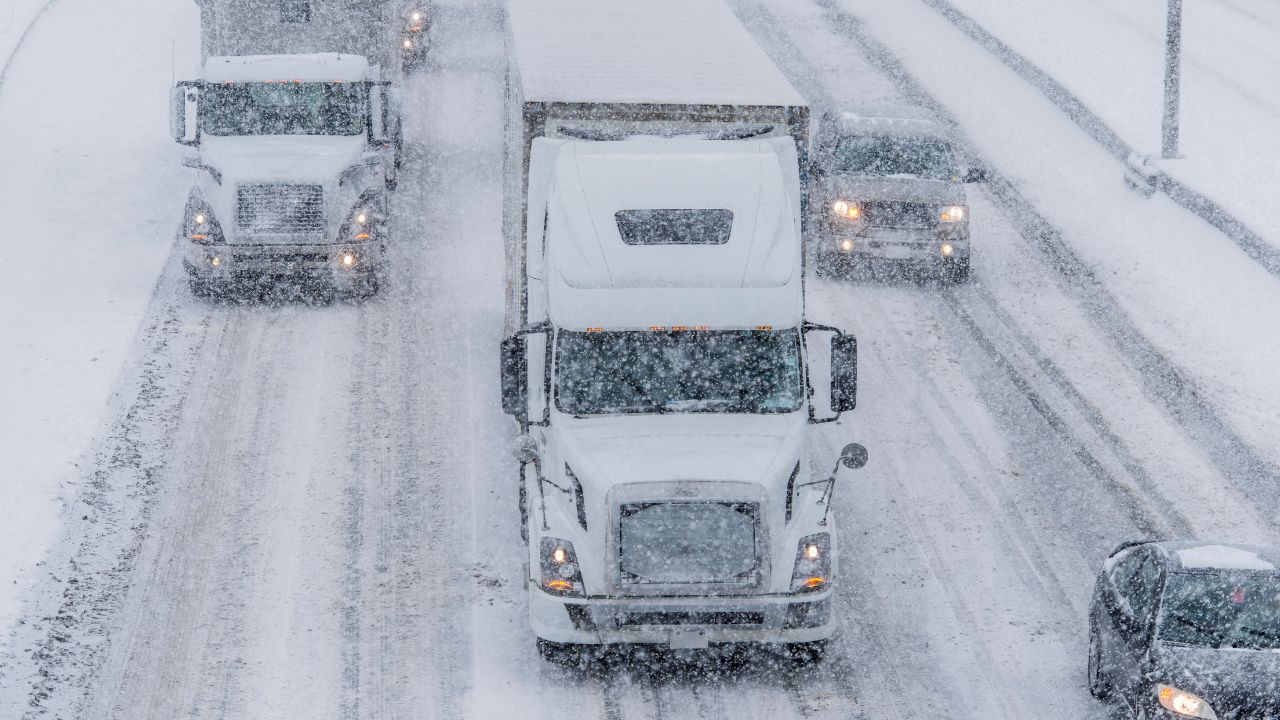
Snow and ice eliminate tire grip, creating catastrophic stopping distance problems for heavy commercial vehicles. Black ice—the invisible killer on winter roads—gives drivers zero warning before traction vanishes. Large trucks require up to two football fields (600 feet) to stop under normal conditions. On ice, that distance multiplies exponentially, making collision avoidance nearly impossible. The jackknife risk increases dramatically when trailers lose traction independently of the cab. These conditions directly impact fleet insurance rates, as winter-related accidents represent the costliest claims for carriers. Trucking risk mitigation for truck fleets must prioritize ice and snow protocols to control claim frequency during December operations.
Cold temperatures trigger multiple mechanical failures that strand drivers and generate claims:
Fleet managers carry primary responsibility for winter weather preparedness, but effective trucking risk mitigation requires coordination across multiple roles. The fleet manager develops winterization protocols, schedules maintenance, monitors weather conditions, and implements route adjustments. Maintenance supervisors execute pre-winter vehicle inspections and ensure proper fluid grades and emergency equipment. Safety directors deliver driver training on winter conditions and defensive techniques. Dispatchers make real-time routing decisions based on weather updates. Drivers perform daily pre-trip inspections and follow winter driving protocols.
This shared accountability directly affects fleet insurance outcomes. California trucking insurance carriers evaluate organizational commitment to winter fleet safety when assessing risk and setting premiums. Claims management teams need documented evidence that all parties fulfilled their winter preparation duties. Clear assignment of responsibilities reduces claim frequency by eliminating gaps in winter readiness protocols.
Successful December fleet protection requires three coordinated actions: rigorous pre-winter maintenance, comprehensive driver training, and real-time telematics monitoring. Industry specialists confirm that proactive winter preparation—not reactive responses—minimizes losses and controls fleet insurance costs.
The preparation strategy must scale to your operational geography. High-risk regions, including Montana, Wyoming, North Dakota, Minnesota, Wisconsin, Michigan, and northeastern states, demand the most aggressive protocols. However, even California trucking insurance carriers recognize that winter storms can impact operations across all western routes. The following steps provide a systematic approach to winter fleet safety that directly reduces claims management expenses. Each action addresses specific failure points that generate December claims, helping fleet owners mitigate weather risks while keeping premiums and claim frequency down through documented trucking risk mitigation for truck fleets.
Pre-season winterization protocols prevent the majority of December mechanical failures. Systematic inspections identify vulnerabilities before they generate roadside breakdowns and insurance claims.
Pre-Winter Vehicle Inspection Checklist
| System | Inspection Requirements | Winter Fleet Safety Impact |
| Tires | Tread depth minimum 6/32" on steer axles, 4/32" on drive/trailer axles; check for uneven wear patterns | Adequate tread prevents loss of traction; reduces jackknife and collision risk |
| Tire Chains | Verify complete chain sets for all drive axles; inspect for broken links or damage | Chain availability prevents route delays and enables operation in chain-control zones |
| Battery | Load test all batteries; check terminals for corrosion; verify cold-cranking amps meet specs | Battery failure is the #1 cause of no-starts; it prevents stranded driver situations |
| Brake System | Inspect air brake components, drums, pads, and lines; test air dryer operation | Brake failure in winter conditions creates catastrophic liability exposure |
| Fuel System | Check fuel filters, water separators, and tank heaters; inspect for leaks | Prevents fuel gelling that strands vehicles and delays deliveries |
| Cooling System | Pressure test radiator; inspect hoses and belts; verify heater operation | Engine overheating or cab heating failure creates driver safety and comfort issues |
| Lighting | Test all lights, reflectors, and markers; clean lenses | Visibility is critical for winter fleet safety and avoiding rear-end collisions |
Fluid maintenance directly impacts mechanical reliability in freezing temperatures. Wrong fluid grades cause immediate system failures that generate claims and strand drivers.
Critical Winter Fluid Maintenance Protocol
| Fluid Type | Winter Specification | Maintenance Schedule | Failure Consequence |
| Engine Oil | Use winter-grade synthetic (5W-40 or 0W-40) | Change before first freeze; check levels daily | Thick summer oil prevents cold starts and damages engines |
| Antifreeze/Coolant | 50/50 or 70/30 ethylene glycol mix; test to -34°F minimum | Test concentration monthly; flush every 2 years | Frozen coolant cracks engine blocks—total loss |
| Diesel Fuel | Add anti-gel additives below 20°F; use winterized #1 diesel blend | Treat every fuel fill in freezing temps | Gelled fuel strands trucks; requires towing and tank heating |
| Air Brake System | Drain air tanks daily; use methanol or alcohol injectors | Daily draining mandatory; alcohol added weekly | Frozen moisture causes brake lockup or complete failure |
| Windshield Washer | Use -20°F rated washer fluid | Refill weekly; check nozzles for freeze-up | Frozen fluid eliminates visibility cleaning during storms |
| Power Steering Fluid | Verify proper viscosity for cold temps | Check monthly; top off as needed | Thickened fluid causes steering failure |
Comprehensive winter emergency kits transform potential disasters into manageable incidents. Proper equipment protects drivers and reduces claims management costs from extended roadside situations.
Mandatory December Emergency Kit Contents:
Defensive driving training for ice and snow conditions separates competent winter operators from liability risks. Driver behavior directly determines whether winter fleet safety protocols succeed or fail.
Training must address the physics of winter driving. Drivers should maintain 6-8 seconds following distances, minimum—10 times normal spacing on ice. This extended spacing provides reaction time when stopping distances multiply. Smooth braking and acceleration techniques prevent loss of traction. Drivers must understand that abrupt inputs—hard braking, aggressive steering, rapid acceleration—break the fragile grip between tires and ice.
Essential Winter Driving Skills Training:
Mandatory tire chain installation training eliminates fumbling in storm conditions. Drivers who've practiced installation in controlled environments install chains 3x faster during roadside emergencies. This training directly reduces trucking risk mitigation for truck fleets by ensuring compliance with chain-control orders. California trucking insurance carriers specifically evaluate driver training documentation when assessing risk profiles and claim frequency patterns for fleet insurance renewals.
Telematics systems deliver measurable results for winter fleet safety. Fleets implementing telematics achieve a 30% reduction in claims frequency through real-time monitoring and driver behavior modification. This technology directly impacts fleet insurance costs by providing documented evidence of trucking risk mitigation for truck fleets.
Real-time GPS tracking combined with weather monitoring enables dynamic route optimization that avoids developing storm systems. Telematics platforms integrate National Weather Service data, DOT road condition reports, and live traffic feeds to redirect trucks away from dangerous conditions before incidents occur. Driver behavior scoring identifies risky winter driving patterns—excessive speed on ice, hard braking, aggressive cornering—and triggers immediate in-cab coaching alerts. Predictive analytics flags high-risk situations by combining driver history, weather forecasts, and route conditions. These proven technology solutions reduce claim frequency while documenting safety efforts that California trucking insurance carriers reward with lower premiums. The data captured by telematics provides claims management teams with objective evidence during incident investigations, protecting fleets from fraudulent or exaggerated claims that spike during winter months.
December weather directly impacts fleet insurance pricing and availability. Commercial auto insurance prices increased 10.4% in Q1 2025, driven primarily by winter claim severity. Understanding how insurers assess winter risk helps fleet managers control premiums while maintaining adequate coverage.
Fleet Insurance Winter Risk Assessment Factors
| Risk Factor | Insurer Evaluation Criteria | Premium Impact | Risk Mitigation Strategy |
| Geographic Operating Region | Routes through Montana, Wyoming, North Dakota, Minnesota, Wisconsin, Michigan, northeastern states | Premiums range from $3,552 (Mississippi) to $20,763 (New Jersey) annually | Document winter preparation protocols; use GPS data to show route flexibility, avoiding storms |
| Historical Incident Frequency | Winter-specific accident rates, claim frequency patterns, and severity trends from previous seasons | High winter claim history increases renewal premiums 20-40% | Implement aggressive winter fleet safety training; reduce December incidents year-over-year |
| Telematics Implementation | Real-time monitoring systems, driver behavior scoring, predictive analytics deployment | A 30% reduction in claims frequency lowers premiums proportionally | Deploy comprehensive telematics; share driver safety scores with underwriters |
| Dashcam Technology | Forward-facing and driver-facing cameras with event recording and cloud storage | 15-25% premium reduction for fleets with verified dashcam programs | Install professional dashcam systems; use footage for driver training and claims defense |
| Driver Training Programs | Documented winter driving courses, hands-on chain installation, and defensive ice/snow techniques | Carriers view trained fleets as 30% lower risk, which reduces claim severity | Conduct annual winter training; maintain certification records for insurance review |
| Maintenance Protocols | Pre-winter inspection programs, winterization checklists, and fluid maintenance schedules | Documented maintenance reduces mechanical failure claims by 40% | Implement systematic winterization; log all inspections for underwriter review |
| Emergency Preparedness | Winter emergency kit standards, stranded driver protocols, and communication systems | Reduces the severity of weather-related incidents and associated claim costs | Equip all vehicles; train drivers on emergency procedures; document compliance |
Key Insurance Strategy Insight: Carriers that demonstrate proactive winter preparation measures are viewed as significantly lower risk by insurers and experience measurably fewer winter-related claims. California trucking insurance underwriters specifically request documentation of winter fleet safety protocols during renewal. Fleets that provide comprehensive evidence of trucking risk mitigation for truck fleets—telematics data, training records, maintenance logs—negotiate better terms and lower premiums. The investment in winter preparedness systems pays for itself through reduced claim frequency and favorable fleet insurance pricing.
December weather creates measurable financial impact: 32% of trucking fatalities, $3.5 billion in industry delays, and 10.4% insurance rate increases driven by winter claim severity. Fleet owners who implement comprehensive winter fleet safety protocols achieve 30% reductions in claims frequency while controlling fleet insurance costs. The winning formula combines three elements: systematic vehicle winterization and fluid maintenance, documented driver training on ice and snow conditions, and telematics technology that monitors real-time conditions and driver behavior.
California trucking insurance carriers reward proactive preparation with lower premiums and better terms. Fleets that document their trucking risk mitigation for truck fleets—through maintenance logs, training records, and telematics data—prove they're lower-risk operations. Claims management becomes simpler when you prevent incidents rather than respond to them. Start winterization now: inspect batteries and brakes, switch to winter-grade fluids, equip emergency kits, train drivers on defensive winter techniques, and deploy telematics monitoring. These actions directly answer how fleet owners mitigate December weather risks while keeping premiums and claim frequency down—through documented, systematic preparation that insurers recognize and reward.
Socal Truck Insurance specializes in fleet insurance solutions that reward proactive winter risk mitigation. Our team understands how systematic winter fleet safety protocols reduce claims frequency and lower premiums. We work with carriers who recognize documented trucking risk mitigation for truck fleets—from telematics implementation to driver training programs.
Get a customized fleet insurance quote that reflects your winter preparedness efforts. Contact Socal Truck Insurance today to discover how proper December weather protocols can reduce your California trucking insurance costs while protecting your drivers and assets.