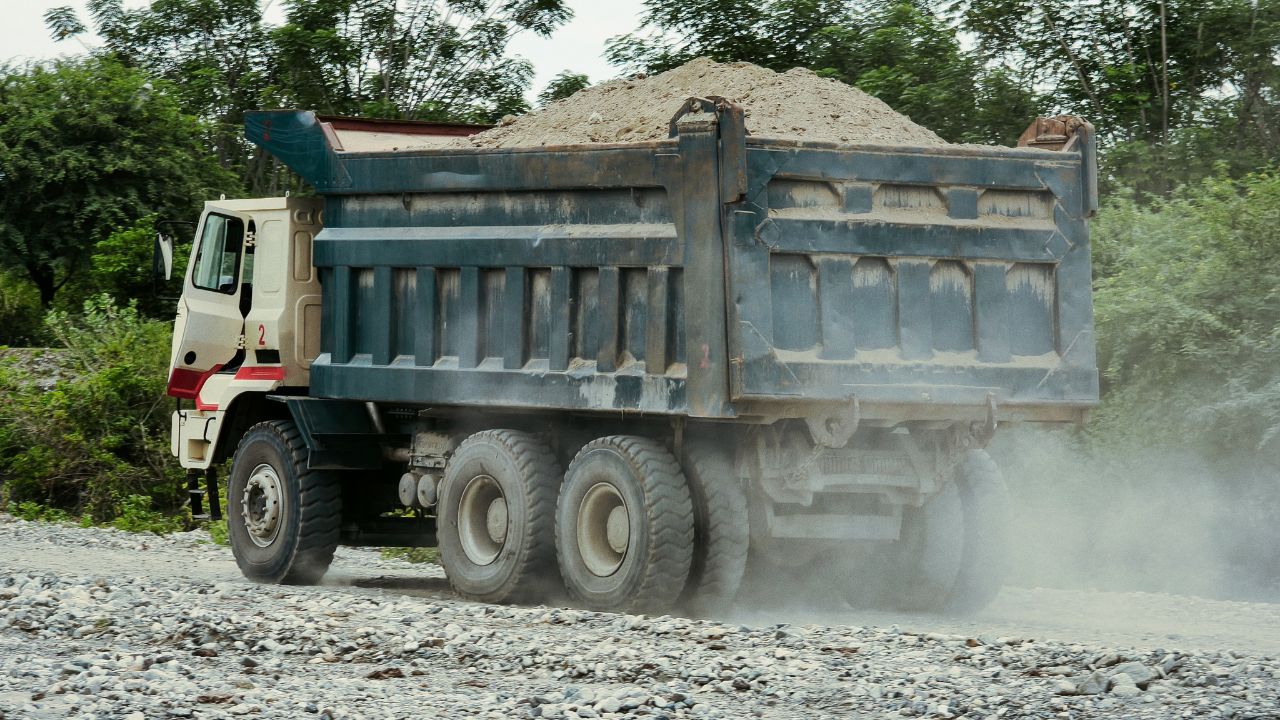
Dump truck insurance in California operates in one of the most regulated and expensive commercial auto markets nationwide. California dump truck operators must balance mandatory high-limit coverages against escalating premium costs that have risen 50% since 2020. State regulations require specific minimum liability limits based on vehicle weight and cargo type, while construction contractors impose additional coverage requirements that directly impact business viability and jobsite access.
The complexity extends beyond state minimums to include multiple coverage layers addressing vehicle protection, workplace injuries, and non-auto business risks. Operators running under their own authority face different insurance structures than leased operators. Understanding these dump truck coverage options and associated costs enables operators to make informed decisions that protect assets and revenue while maintaining compliance with California's regulatory framework.
Key Takeaways
Dump truck commercial insurance provides financial protection against liability claims, vehicle damage, and operational risks specific to construction and hauling operations. This specialized commercial coverage addresses unique exposures dump truck operators face daily, including property damage from material spills, bodily injury from loading zone accidents, and collision risks inherent in construction site navigation. Without adequate insurance, a single severe accident can result in business closure due to liability judgments commonly exceeding $1 million in California's high-cost legal environment.
Comprehensive coverage importance intensifies in California due to social inflation driving nuclear verdicts in commercial trucking litigation. Beyond legal compliance, insurance serves as the gateway to lucrative construction contracts, as general contractors and government agencies like Caltrans mandate specific coverage limits and endorsements before allowing dump trucks on jobsites. Operators lacking required certificates face immediate work stoppage regardless of driving record or equipment quality.
Nuclear verdicts in California commercial trucking cases frequently exceed $10 million, creating catastrophic financial exposure for inadequately insured operators. Social inflation compounds this risk as juries award increasingly large damages in sympathy-driven verdicts against commercial defendants. Understanding coverage requirements and risks becomes essential when a single accident can result in business-ending liability regardless of fault percentage.
Rising repair costs for modern dump trucks with advanced safety systems and emissions controls directly increase both physical damage premiums and deductible amounts. Vehicle downtime from accidents or mechanical failures interrupts revenue generation, making business income interruption a critical concern. A history of violations or accidents creates a compounding premium spiral, as insurers classify operators with poor safety records into high-risk tiers with premiums potentially 200-300% above standard rates.
Operators must maintain an active Motor Carrier Permit (MCP) issued by the California Department of Motor Vehicles to legally haul freight. Filing proof of insurance through Certificate of Insurance MC 65 M directly with the state constitutes a non-negotiable requirement for permit maintenance. The certificate must reflect current coverage limits meeting or exceeding minimum state requirements based on vehicle weight and cargo classification.
Additional Insured status represents a required endorsement that extends liability coverage to protect general contractors and property owners from claims arising from dump truck operations. Waiver of Subrogation prevents insurers from seeking recovery from contractors after paying claims. These endorsements appear on virtually every construction contract, and their absence results in immediate job site exclusion regardless of other qualifications.
Multiple truck insurance types combine to create comprehensive protection addressing vehicle liability, physical asset protection, and business operational risks. The standard insurance stack for California dump truck operators includes commercial auto liability as the foundation, supplemented by physical damage coverage for the vehicle itself and general liability for non-driving business activities.
Additional coverages like workers' compensation and cargo insurance address specific operational exposures based on business structure and hauling activities. The complexity of dump truck insurance coverage requires operators to evaluate each component's necessity against premium costs and contractual requirements. Coverage selection directly impacts both regulatory compliance and the ability to secure profitable construction contracts demanding specific insurance verification.
Commercial auto liability protects against bodily injury and property damage caused to third parties during trucking operations and loading activities. This coverage responds to claims from injured motorists, damaged property, and pedestrian accidents resulting from dump truck operations. Commercial auto liability represents approximately 38.5% of total premium spend across the California market, making it the single largest insurance expense for operators.
Commercial auto liability adoption reaches 95%+ among California operators due to state legal requirements and contractor mandates. Combined Single Limit (CSL) structures provide a single coverage limit for bodily injury and property damage combined. California mandates a minimum $750,000 CSL for general freight vehicles over 10,000 pounds, though most operators carry $1,000,000 or higher to meet contractor requirements and provide adequate protection against nuclear verdict exposure.
Physical damage coverage protects the insured vehicle against collision, theft, vandalism, and environmental damage from weather or fire. This coverage pays for repairs or total loss settlement when the dump truck sustains damage, regardless of fault. Physical damage coverage represents roughly 22.0% of market premium distribution across California dump truck operators, making it the second-largest coverage expense after liability.
Physical damage coverage maintains adoption rates of 70-75% among California operators, with higher rates among newer vehicle owners and financed equipment. Physical damage premiums vary significantly based on vehicle age, weight, and stated value on policy declarations. Operators frequently adjust deductibles between $1,000 and $5,000 to balance premium costs against out-of-pocket exposure, with approximately 40-50% choosing higher deductibles to reduce annual premium expenditures.
General liability covers non-auto-related risks such as injuries or property damage occurring at jobsites or business premises. This coverage responds to claims like pedestrian slip-and-fall accidents at the operator's business location or property damage from improperly secured loads. General liability accounts for 14.5% of premium distribution across the California dump truck insurance market.
General liability adoption reaches 60-65% of California operators, driven primarily by contractor requirements rather than state mandates. Most construction contracts require a minimum of $1,000,000 general liability limits before allowing dump trucks on jobsites. Primary versus general liability insurance differences confuse many operators, but understanding the distinction proves essential when contractors review certificates before project access approval.
Workers' compensation and fleet insurance address distinct aspects of dump truck operations, with workers' compensation covering employee injuries and fleet insurance providing multi-vehicle policy efficiency. Single-truck owner-operators without employees face different requirements than established companies with multiple drivers.
The decision to purchase these coverages depends on business structure, employee count, and vehicle fleet size. Understanding when each coverage becomes necessary prevents both coverage gaps and unnecessary premium expenditures. Operators must evaluate their specific circumstances against California's regulatory requirements and practical business needs to determine appropriate coverage combinations, balancing protection with affordability.
Workers' compensation provides medical benefits and wage replacement to employees injured during employment, regardless of fault determination. This mandatory coverage protects both employees and employers by providing guaranteed benefits while limiting employer liability exposure. Workers' compensation represents 11.5% of premium distribution across the California commercial trucking sector.
Workers' compensation adoption reaches 50-60% among dump truck operators, reflecting the proportion operating with hired drivers versus owner-operators. Owner-operators without employees may not require workers' compensation under California law, creating substantial premium savings for single-person operations. Occupational Accident insurance provides similar but more limited benefits than workers' compensation at a lower cost, offering an alternative for owner-operators who want protection without mandatory workers' compensation expense.
Fleet insurance allows operators to insure multiple vehicles under a single policy rather than maintaining separate policies per truck. This consolidated approach simplifies policy management, renewal coordination, and certificate issuance for contractor compliance. Fleet policies offer volume discounts of typically 10-15% compared to individual policy costs, providing meaningful savings for operations running three or more trucks.
Fleet insurance requires operations with three or more vehicles to qualify for multi-vehicle policy structures and associated discounts. Advantages of fleet insurance for trucks include streamlined administration and consolidated billing that reduces administrative burden. However, a severe claim on one fleet vehicle can impact premiums for the entire fleet at renewal, creating potential disadvantages when individual vehicle loss histories significantly differ.
Premium calculation incorporates multiple risk factors that insurers analyze through sophisticated underwriting models to determine appropriate pricing. Vehicle specifications, operating parameters, driver qualifications, and claims history combine to create individualized risk profiles. California's regulatory environment and elevated litigation costs add baseline expenses affecting all operators regardless of individual risk characteristics.
Understanding premium calculation factors enables operators to identify cost-reduction opportunities without compromising essential coverage. Strategies to lower dump truck insurance costs focus on controllable variables demonstrating reduced risk to underwriters. Operators who actively manage safety records, select appropriate deductibles, and implement loss control measures consistently achieve lower premiums than competitors with reactive risk management approaches.
Local operations covering 0-50 miles generally incur lower premiums than regional or interstate hauling due to reduced exposure time. Operating radius directly correlates with accident probability, as longer distances increase exposure to varying road conditions and traffic densities. Hauling standard aggregate like sand, gravel, and dirt presents standard risks versus hazardous materials requiring specialized pollution liability and significantly higher premiums.
Metropolitan areas require higher coverage limits than rural operators due to increased property values and congestion-related accident severity. New business ventures face higher premium tiers due to a lack of established loss history. Operators with recent claims history face substantially higher premiums as prior losses statistically predict future claim likelihood, with rate increases often persisting for three to five years following incidents.
Most commercial trucking businesses pay between $9,000 and $18,000 per truck annually for standard coverage combinations meeting California requirements. Average dump truck insurance costs vary significantly based on operational structure and authority status. Owner-operators running under their own authority pay $14,000 to $32,000 annually per truck due to primary liability requirements and startup risk classifications.
Leased operators working under another carrier's authority pay $3,000 to $5,000 annually for non-trucking liability and physical damage only. Small fleets operating 3-5 trucks pay $8,000 to $13,000 per truck annually, benefiting from volume discounts and established loss histories. Owner-operators under their own authority face substantially higher premiums than leased operators because they carry primary liability responsibility rather than relying on the leasing carrier's insurance for loaded operations.
Approximately 40-50% of operators opt for higher deductibles ranging from $2,500 to $5,000 to reduce annual premium costs. Deductible selection directly trades premium savings against out-of-pocket expense when claims occur, requiring operators to maintain adequate cash reserves. Multiple methods to lower commercial truck insurance costs include safety training programs, telematics installation, and clean driving record maintenance.
Integration of telematics programs occurs in 20-30% of California fleets, providing insurers with real-time driving data documenting safe behaviors. Telematics discounts typically range from 5-15% annually when data demonstrates consistent adherence to speed limits and smooth driving patterns. Additional premium reduction strategies include annual policy shopping, bundling multiple coverage types with single carriers, and participation in insurer-sponsored safety programs rewarding loss-free operations with reduced rates at renewal.
Consumer decision-making in commercial truck insurance balances multiple competing priorities, with premium cost consistently dominating the selection process. California operators face substantially higher insurance costs than most other states due to elevated litigation expenses and regulatory requirements. Understanding what drives purchasing decisions helps operators align coverage selections with both financial constraints and operational requirements.
Demographic factors and geographic location significantly influence coverage adoption patterns across California's diverse commercial trucking landscape. Operators in metropolitan areas face different contractor requirements than rural haulers serving agricultural markets. Age demographics correlate with coverage comprehensiveness, as established operators typically carry broader protection than budget-constrained newer entrants focused on minimum compliance.
Premium cost represents 38.5% of consumer decision-making priority, making price the dominant factor in insurer selection and coverage structuring. Operators under financial pressure frequently reduce coverage to state minimums despite contractor requirements demanding higher limits. Coverage breadth accounts for 27.0% of decision-making priority as operators balance adequate protection against premium affordability constraints.
Insurer reputation and financial stability constitute 17.5% of consumer decision-making priority, reflecting concerns about claims payment reliability during major losses. Claims process quality represents 12.5% of decision-making priority, with efficient claims handling minimizing vehicle downtime that directly impacts revenue generation. Operators increasingly evaluate insurers based on specialized trucking expertise rather than generic commercial insurance capabilities, seeking carriers who understand construction industry contract requirements and California regulatory nuances.
The average age of a dump truck operator in California is 47 years old, with significant variations in coverage preferences across age cohorts. Older operators aged 50-59 demonstrate 70% general liability adoption rates, reflecting established businesses with comprehensive contractor relationships. This demographic maintains 78% physical damage adoption rates, protecting substantial equipment investments accumulated over decades.
Younger operators aged 18-29 show 92% adoption of the minimum required liability, reflecting budget constraints during business establishment phases. Geographic coverage patterns show the highest adoption of robust insurance stacks in the Los Angeles Metro and San Francisco Bay Area, where construction contracts mandate comprehensive coverage before jobsite access approval.
California imposes strict regulatory requirements on commercial vehicles to ensure public safety and financial responsibility following accidents. State regulations establish baseline minimum coverage levels varying based on vehicle weight and cargo classification. Regulatory compliance for heavy trucks in California extends beyond simple liability limits to encompass filing requirements and ongoing proof of insurance maintenance.
Federal Motor Carrier Safety Administration (FMCSA) regulations layer additional requirements on top of state mandates for interstate operators. The interplay between state and federal requirements creates complexity requiring specialized expertise to navigate successfully. Operators must understand not only the minimum legal requirements but also how contractor and government agency mandates exceed these baselines in practical business operations.
General freight vehicles over 10,000 pounds require a minimum of $750,000 CSL for bodily injury and property damage combined under California law. This baseline applies to standard construction materials, including aggregate, sand, gravel, and general building supplies. Oil transport operations require a minimum of $1,000,000 CSL due to environmental contamination risks and cleanup cost exposure.
Hazardous materials transport requires up to $5,000,000 CSL, depending on specific materials classification and quantity hauled per load. Motor Carrier Permit requirements include filing proof of insurance with the California Department of Motor Vehicles demonstrating continuous coverage maintenance. Operators must submit Certificate of Insurance MC 65 M showing coverage effective dates and limits meeting or exceeding state requirements based on their specific operating authority and cargo classifications.
Operators contracting with Caltrans must meet scaling limits based on fleet size that exceed baseline state minimums. Caltrans requires $750,000 minimum coverage for operations with 7 or fewer vehicles. The agency mandates $1,500,000 for fleets operating 8-15 vehicles, reflecting increased exposure from larger operations.
Caltrans requires $5,000,000 in liability coverage for fleets of 16 or more vehicles, creating substantial premium obligations for large operators. Private general contractors frequently impose additional requirements beyond Caltrans standards, commonly demanding $1,000,000 general liability plus Additional Insured endorsements. Commercial truck insurance in California must accommodate both regulatory minimums and practical contractor requirements that often double or triple baseline coverage levels to maintain jobsite access and contract eligibility.
California's commercial truck insurance market concentrates heavily among several major carriers who dominate market share through specialized offerings. These market leaders differentiate through service quality, coverage customization, and claims handling efficiency rather than price competition alone. Understanding insurer strengths helps operators select carriers aligned with their specific operational needs and business priorities.
Market concentration creates competitive dynamics where the top providers control approximately 53% of the total market share. Smaller specialized carriers serve niche markets, including high-risk operators and unique cargo classifications that major carriers decline. The competitive landscape continues evolving as insurers adjust underwriting criteria, responding to elevated loss ratios in California's challenging litigation environment.
Progressive Commercial holds 22.5% market share in California commercial trucking insurance, representing the largest single carrier presence. The company has earned recognition for fast quoting processes, enabling operators to secure coverage within hours. State Farm captures 18.0% of the market through established customer service infrastructure and local agent availability across California.
The Hartford maintains 12.5% market share with particular strength in fleet policies serving operators with 5+ vehicles. Progressive Commercial offers a large repair network access that minimizes vehicle downtime following accidents, a critical advantage for operators dependent on continuous revenue generation. State Farm provides established customer service with local agent relationships that appeal to operators preferring personal interaction over digital-only insurance management.
The Hartford excels in fleet policies and comprehensive coverage bundles that simplify insurance management for multi-vehicle operations. The company offers specialized endorsements addressing construction industry requirements, including additional insured certificates and waiver of subrogation at competitive pricing. Sentry Insurance provides highly customizable policies with flexible limit structures accommodating unique operational profiles that standard carriers struggle to insure.
Sentry offers proactive safety culture development programs, helping operators reduce claims frequency through driver training and loss control consulting. These value-added services particularly benefit newer operators establishing safety programs that ultimately reduce long-term insurance costs. Specialized carriers like Sentry and The Hartford demonstrate understanding of construction industry contract requirements, streamlining certificate issuance and endorsement processing that generic commercial insurers often complicate.
California dump truck operators must balance comprehensive protection against premium affordability in a market where costs continue rising. Selecting appropriate coverage requires understanding both mandatory minimums and practical contractor requirements exceeding state baselines. Operators who implement active risk management through safety programs, telematics adoption, and clean driving records consistently achieve better premium rates than reactive competitors.
The complexity of dump truck insurance in California extends beyond simple policy purchase to ongoing compliance management and coverage adequacy verification. Working with specialized insurance advisors who understand construction industry requirements and California regulatory nuances helps operators avoid coverage gaps that could result in contract disqualification or financial catastrophe following accidents. SoCal Truck Insurance has served California commercial trucking operations for over 25+ years, providing specialized expertise that helps operators secure appropriate coverage while controlling costs through strategic policy structuring.
One missing endorsement can shut your trucks out of a jobsite, and a single underinsured accident can wipe out the business you built. You shouldn't have to sort through that alone. For more than 25 years, SoCal Truck Insurance has helped California dump truck operators lock in the right liability limits, physical damage protection, and contractor-required endorsements like Additional Insured and Waiver of Subrogation, filed and ready the moment you need them.
Your dedicated agent shops Progressive, Canal, and Infinity to find coverage that fits how you run and what you can spend, then stays reachable 24/7 for the quick changes and certificate requests this work demands. We handle the paperwork in English and Spanish, so you can stay focused on the road.
Contact us today for a free quote, or visit our Downey office at 8135 Florence Ave #101. Let's get your dump truck protected and your next contract moving.