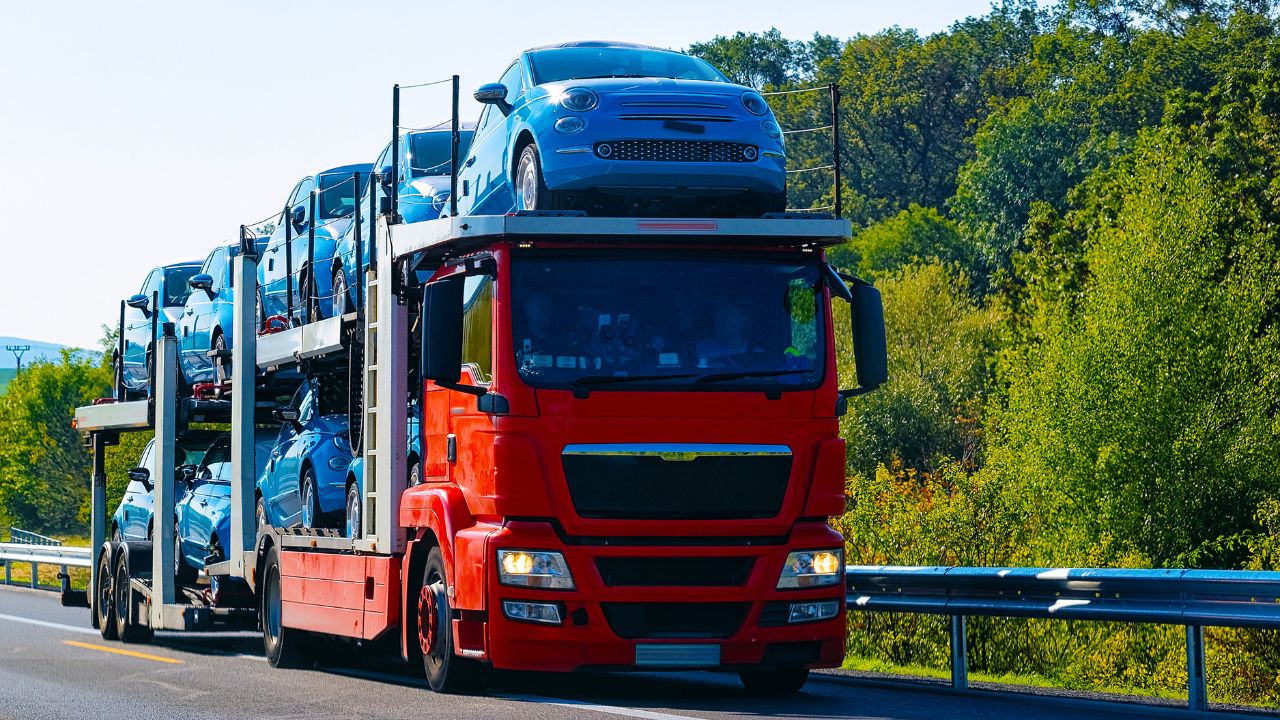
Trucking businesses face liability exposure both on the road and around the yard. One policy does not protect against both situations. Primary liability insurance covers third-party harm caused by your truck during covered operations. General liability protects your business from premises injuries, operations claims, and other non-auto exposures.
Many owner-operators and fleet managers assume one policy handles all liability coverage is crucial for trucking business needs. That assumption creates dangerous coverage gaps. Understanding primary liability vs general liability helps you build complete protection.
Key Takeaways
| Category | Primary Liability Insurance | General Liability Insurance |
| What it covers | Third-party bodily injury and property damage caused by your truck | Premises injuries, operations claims, and other non-auto business exposures |
| Where it applies | On the road, during covered trucking operations | At your yard, office, loading dock, or during non-driving business activity |
| Legal requirement | Mandatory under 49 CFR 387.7 and 387.9 for regulated carriers | Not required for operating authority, but often required by contracts or leases |
| Typical claim example | Your truck rear-ends another vehicle and injures the driver | A visitor slips at your yard or freight damages a customer's property during loading |
| Does it repair your truck or cargo? | No, it pays third parties, not your own equipment or freight | No, it addresses business liability, not your equipment or cargo |
Primary auto liability insurance pays for third-party bodily injury and property damage caused by your truck. It responds when your insured vehicle injures someone or damages property during covered trucking operations. This coverage forms the legal foundation for operating a commercial motor vehicle under federal and state financial-responsibility rules.
Primary liability does not protect your truck, your cargo, or your business premises. It exists to satisfy public-liability requirements and protect others harmed by your vehicle. Most trucking operations require this coverage before they can legally haul freight.
Primary security is public liability coverage responsible for the first dollar of coverage under 49 CFR 387.303. Financial responsibility is the minimum liability coverage required before a motor carrier can operate. A motor carrier must have minimum financial-responsibility levels in effect before operating according to 49 CFR 387.7.
Federal regulations make primary liability mandatory, not optional, for regulated carriers. State agencies will not issue permits until proof of coverage is filed. Compliance depends on maintaining continuous coverage at or above the required limit for your operation.
Primary liability insurance covers third-party bodily injury and property damage caused by your truck during covered operations. A covered claim occurs when your insured truck crashes and injures another driver or damages another vehicle. The policy defends you and pays settlements or judgments up to the policy limit.
Coverage applies to accidents that happen while the truck is dispatched or performing commercial operations. Primary auto liability insurance excludes many scenarios outside standard trucking activity. Confirm with your agent which operations fall inside or outside your policy's scope.
Primary liability does not repair the insured truck after a collision or comprehensive loss. It does not replace cargo damaged in transit. Primary liability does not cover theft, vandalism, or fire damage to your equipment.
It also does not automatically cover every business lawsuit filed against your company. Trucking insurance types differ by risk category. A slip-and-fall at your office or a loading-dock injury may fall outside auto-liability coverage.
General liability insurance covers broader business liability exposures beyond your truck's on-road operations. It protects your business from financial loss due to bodily injury, property damage, medical expenses, libel, slander, and lawsuit defense. The Small Business Administration defines general liability as including coverage for defending lawsuits and paying settlement bonds or judgments.
This policy addresses risks your trucking business faces when customers visit your yard or during loading activities. General liability responds to claims that do not involve the truck hitting someone on the road. It fills liability gaps left by auto policies.
General liability covers bodily injury or property damage from premises and operations not covered by auto policies. A visitor slipping at your trucking office or yard is a common general liability claim. Damage during loading or delivery activities may fall under general liability if the auto policy excludes it.
Advertising injury and personal injury claims are also covered under most general liability policies. These claims include defamation, slander, or copyright infringement allegations. General liability protects your business reputation and financial stability when non-driving incidents create legal exposure.
General liability does not satisfy the trucking auto-liability requirement mandated by federal or state regulators. It does not cover normal on-road truck crashes where your vehicle hits another car or pedestrian. Regulators require specific commercial auto liability, not business general liability, for operating authority.
Buying general liability without primary liability leaves you noncompliant and unprotected on the road. Understanding liability coverage for your box truck insurance requires knowing which policy responds to which claim. Each coverage addresses a separate exposure category.
General liability becomes essential when your business has premises, employees, or customer-facing operations. Premises and operations claims include injuries at your yard, office, or loading dock. A trucking business can be underinsured if it buys only legally required primary liability and ignores these risks.
Owner-operators without a physical yard may still need general liability if they load or unload freight. Fleet managers with multiple locations face significant premises exposure. General liability protects your business assets when incidents occur off the road.
Primary liability and general liability address completely different questions and risk categories. Liability coverage differences matter because regulators, contracts, and claims adjusters treat each policy separately. Assuming one replaces the other creates legal and financial gaps.
A complete trucking insurance program includes both coverages when your operation has both on-road and business-premises exposures. Skipping either policy leaves your business vulnerable. Understanding which coverage responds to which claim prevents surprise denials.
Primary liability answers "What if my truck injures someone or damages property on the road?" It protects your business when your vehicle causes a covered accident during dispatch. The policy pays third-party medical bills, vehicle repairs, and legal defense costs up to the limit.
A primary liability explanation must start with its core function: protecting others from harm your truck causes. This coverage is tied to vehicle operations. It does not apply to non-driving business activities or premises incidents.
General liability answers "What if my trucking business is sued for non-auto business liability?" The general liability definition includes bodily injury, property damage, and personal injury from business operations. It protects your company when someone is injured at your facility or during non-driving activities.
Claims covered by general liability rarely involve the truck moving on public roads. Instead, they arise from loading docks, customer visits, or business operations. This coverage protects your business reputation and assets from lawsuits outside the auto-liability scope.
A trucking business can be noncompliant if it buys general liability and assumes it replaces auto liability. Federal and state regulators require specific commercial truck liability to issue operating authority. General liability does not satisfy that requirement.
Primary liability is foundational for regulated commercial trucking and tied to federal financial-responsibility requirements, while general liability is voluntary protection. Primary liability covers on-road harm; general liability covers business risks around the truck. Relying on only one type exposes your business to either compliance violations or uninsured premises claims.
Your required liability limit depends on multiple factors beyond a single federal minimum. Cargo type, vehicle weight, operating authority, and shipper contracts all influence how much coverage you need. How insurance requirements change by cargo type is a critical compliance and contracting question.
Federal regulations set minimum levels based on cargo category and vehicle size. State rules may impose additional requirements. Contracts often exceed regulatory minimums to protect shippers and brokers from large claims.
For-hire interstate property carriers with a GVWR of 10,001 pounds or more transporting nonhazardous property must carry $750,000 minimum under 49 CFR 387.9. Certain oil, hazardous waste, and hazardous materials categories not in the $5 million group require $1,000,000 minimum. Specified hazardous substances and high-risk bulk materials require $5,000,000 minimum.
California Motor Carrier Permit liability insurance levels vary from $300,000 to $5,000,000 combined single-limit coverage depending on vehicle type and property transported. State rules differ from federal requirements in some cases. Always confirm which standard applies to your specific operation.
| Operation Type | Minimum Liability Coverage Required |
| For-hire interstate carriers, GVWR 10,001+ lbs, nonhazardous property (49 CFR 387.9) | $750,000 |
| Oil, hazardous waste, and hazardous materials outside the $5 million group | $1,000,000 |
| Specified hazardous substances and high-risk bulk materials | $5,000,000 |
| California Motor Carrier Permit (varies by vehicle type and cargo) | $300,000 to $5,000,000 combined single limit |
Contracts, shippers, brokers, leases, and cargo type may require higher limits than the regulatory minimum. Many brokers demand $1,000,000 even when federal rules allow $750,000. High-value cargo may trigger contractual requirements for $2,000,000 or more.
Hauling household goods, hazardous materials, or oversized loads often increases your required limit. Review every contract before accepting a load. Motor truck cargo insurance works alongside liability to protect freight, but liability limits must still meet or exceed shipper demands.
Verify your vehicle's GVWR, operating authority type, cargo category, and routes before quoting liability coverage. Confirm whether you operate interstate, intrastate, for-hire, or under private authority. Each classification affects your minimum required limit.
Ask your agent to review your shipper and broker contracts for hidden limit requirements. Verify whether California MCP or other state permits impose additional rules. Confirming these details upfront prevents compliance violations and contract breaches.
Liability policies protect others but leave gaps in your own equipment and cargo protection. Physical damage, cargo, non-trucking, and excess coverage fill those gaps. A complete program protects both third-party claims and your own business assets.
Owner-operators and fleets must evaluate which supplemental coverages their operation requires. Skipping essential coverages saves premium dollars today but creates devastating financial exposure tomorrow. Build your program by identifying every scenario that could stop your business.
Physical damage coverage protects the insured truck and trailer from collision and comprehensive losses. Collision pays for crash repairs to your own vehicle regardless of fault. Comprehensive covers theft, vandalism, fire, weather damage, and other non-collision losses.
Primary liability does not repair your truck after an accident, so physical damage is essential for financed equipment. Lenders require it until the loan is paid off. Even owner-operators with paid-off trucks risk losing their income source without physical damage coverage.
Motor truck cargo coverage protects freight being transported in your truck or trailer. It responds when cargo is damaged, stolen, or destroyed during transit. Liability policies do not replace lost or damaged cargo.
Shipper contracts often require minimum cargo limits of $100,000 or more. High-value loads may require higher limits or special endorsements. The importance of commercial auto insurance for tow trucks and cargo haulers includes protecting the freight being moved.
Excess security is coverage above primary or underlying security under 49 CFR 387.303. Non-trucking or bobtail coverage can apply when leased owner-operators drive outside dispatch or without a trailer. Trailer interchange coverage protects non-owned trailers in your possession while under interchange agreements.
Excess or umbrella coverage adds limits above underlying liability policies to protect against catastrophic claims. Workers' compensation covers employee injuries and is required in most states. California DMV requires proof of Workers' Compensation insurance or a signed exemption for MCP applications.
Owner-operators and fleet managers face different compliance and risk-management challenges when building liability programs. Independent truckers worry about affordability and minimizing administrative time. Fleet managers focus on regulatory compliance, driver safety, and centralized risk control.
Both groups benefit from asking detailed questions before buying coverage. Understanding which policies respond to which claims prevents coverage gaps. Working with an agent who understands trucking operations simplifies the process.
Independent owner-operators must balance affordability with adequate protection for their primary income source. One accident can devastate a single-truck business if liability limits are too low. Owner-operators also face time scarcity when managing administrative tasks like insurance renewals and claims.
Many owner-operators operate under lease agreements that impose insurance requirements beyond regulatory minimums. Confirm your lease's liability, cargo, and physical damage requirements before binding coverage. Ensure your policy includes non-trucking or bobtail coverage if you drive the truck outside dispatch.
Fleet managers oversee compliance for multiple power units, drivers, and routes across state lines. They must track proof-of-insurance filings, certificate requests, and policy renewals while controlling costs. Fleet programs require centralized management to prevent coverage lapses on individual units.
Risk management includes driver training, safety programs, and claims-frequency analysis to reduce premiums over time. Fleet managers should review liability, physical damage, cargo, and excess limits annually to ensure they align with current operations. Proactive compliance and risk control reduce both regulatory penalties and insurance costs.
Ask your agent which coverages satisfy federal and state financial-responsibility requirements for your authority type. Confirm whether your policy includes all contracted routes, cargo types, and vehicle classifications. Verify that your limit meets shipper and broker contract requirements.
Ask how claims are reported and what documentation you must provide after an accident. Confirm whether your policy includes non-trucking coverage, trailer interchange, or other endorsements you need. Understanding your policy's scope before a loss prevents claim denials.
Compliance failures can shut down your operation, while coverage gaps expose your business to uninsured losses. State and federal regulations create a baseline for coverage. Documentation requirements prove you meet those standards.
Misunderstanding coverage triggers compliance violations, claim denials, and financial hardship. Taking time to verify your requirements and document your proof prevents these outcomes. Compliance is not optional for regulated carriers.
Federal regulations under 49 CFR Part 387 establish minimum financial-responsibility levels for interstate commerce. California and other states impose additional requirements for intrastate operations. Your operating authority, cargo type, and vehicle weight determine which rules apply.
Interstate for-hire carriers must meet FMCSA requirements and file proof with the agency. Intrastate carriers must satisfy state DMV or public-utility commission rules. Operating across state lines without meeting all applicable requirements risks fines, out-of-service orders, and permit revocation.
Proof of financial responsibility may consist of Form MCS-90 insurance endorsement, Form MCS-82 surety bond, or FMCSA self-insurance authorization. Form MCS-90 is the most common proof filed by insured carriers. Form MCS-82 surety bond is an alternative for carriers that qualify.
FMCSA-authorized self-insurance is acceptable proof for large carriers meeting strict financial requirements. California proof of insurance for MCP includes a Certificate of Insurance MC 65 M). Keep copies of all filings and certificates in your truck and office.
DMV will not issue a California MCP until all requirements are met, including liability insurance and other documentation. California DMV requires proof of Workers' Compensation insurance or a signed exemption for MCP applications. Missing any requirement delays or blocks permit issuance.
Misunderstanding which coverage satisfies compliance can lead to operating without valid authority. Claim denials occur when businesses file claims under the wrong policy or outside the policy's scope. Taking time to understand your coverage prevents these costly mistakes.
Primary liability and general liability serve complementary roles in a complete trucking insurance program. Primary liability keeps your truck legal and protects against on-road third-party harm. General liability protects your business from premises injuries, operations claims, and other non-auto exposures that could otherwise result in uninsured lawsuits.
Most trucking operations need both coverages to address their full liability exposure. Owner-operators benefit from understanding which policy responds to which claim before an incident occurs. Fleet managers must build programs that satisfy compliance requirements while protecting business assets from both on-road and off-road risks.
SoCal Truck Insurance helps trucking businesses build complete coverage programs built around their operations. With over 25 years of experience serving California truckers, we understand the compliance and risk-management challenges you face. Our team ensures every policy meets regulatory requirements while protecting your business from coverage gaps.
Primary liability and general liability solve two different problems, and carrying only one leaves real gaps in your protection. SoCal Truck Insurance has spent 25+ years helping California owner-operators and fleet managers build coverage programs that satisfy federal and state requirements while protecting the risks a truck policy alone will not touch. Our bilingual team is available 24/7, and every policyholder works with a dedicated agent who understands trucking operations from the ground up.
Call (888) 531-2855 to talk through your liability exposure with a specialist, or get a free quote online and see how complete coverage fits your operation and your budget.
Most trucking businesses need both because each policy answers a different question. Primary liability satisfies the federal and state financial-responsibility rules that let you legally operate a commercial truck on the road. General liability protects your business from premises injuries, loading incidents, and other non-auto claims that primary liability was never built to cover. Carrying only one leaves either a compliance gap or a business-liability gap, depending on which one you skip.
Federal rules under 49 CFR 387.9 set a $750,000 minimum for most for-hire interstate carriers with a GVWR of 10,001 pounds or more hauling nonhazardous freight, with higher minimums up to $5,000,000 for hazardous cargo. California's Motor Carrier Permit adds its own liability requirement, ranging from $300,000 to $5,000,000 combined single limit depending on your vehicle and cargo type. Your contracts with shippers or brokers can require higher limits than either regulatory minimum, so confirm your actual requirement before you bind coverage.
No. General liability does not satisfy your commercial auto-liability requirement and does not respond to a truck crash on a public road. It covers non-driving exposures instead, such as a visitor injured at your yard or property damaged during loading. If your truck causes an on-road accident, primary liability insurance is the policy that responds.
Primary liability premiums vary based on your cargo type, vehicle size, driving record, operating radius, and the liability limit your contracts require. Owner-operators hauling standard freight at the federal minimum typically pay less than those hauling hazardous materials or high-value cargo that carries higher required limits. Because pricing depends on so many operation-specific factors, the most accurate way to see your rate is to get a free quote from a specialist who can review your authority and routes.
Yes. SoCal Truck Insurance works with carrier partners including Progressive, Canal Insurance, and Infinity to build coverage programs that pair primary liability with general liability, cargo, physical damage, and other coverages your operation needs. A dedicated agent reviews your authority type, cargo, and contracts to confirm every required limit is met in one coordinated program instead of separate, disconnected policies.