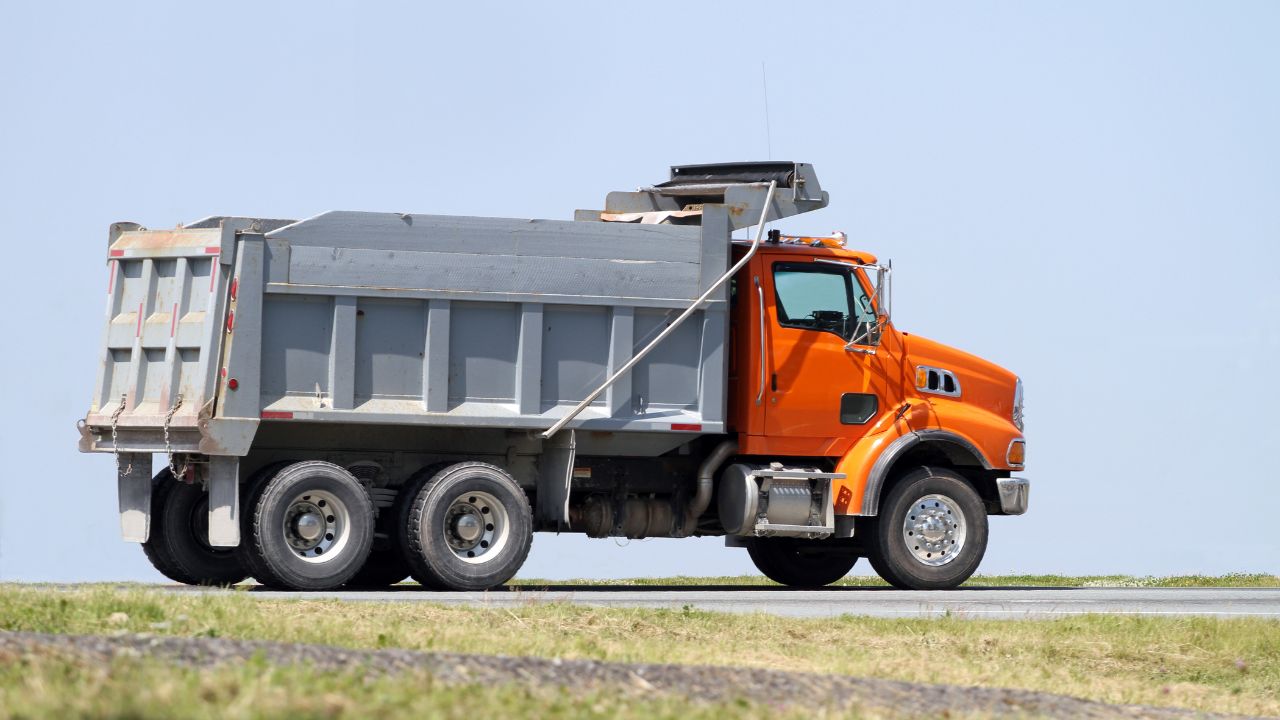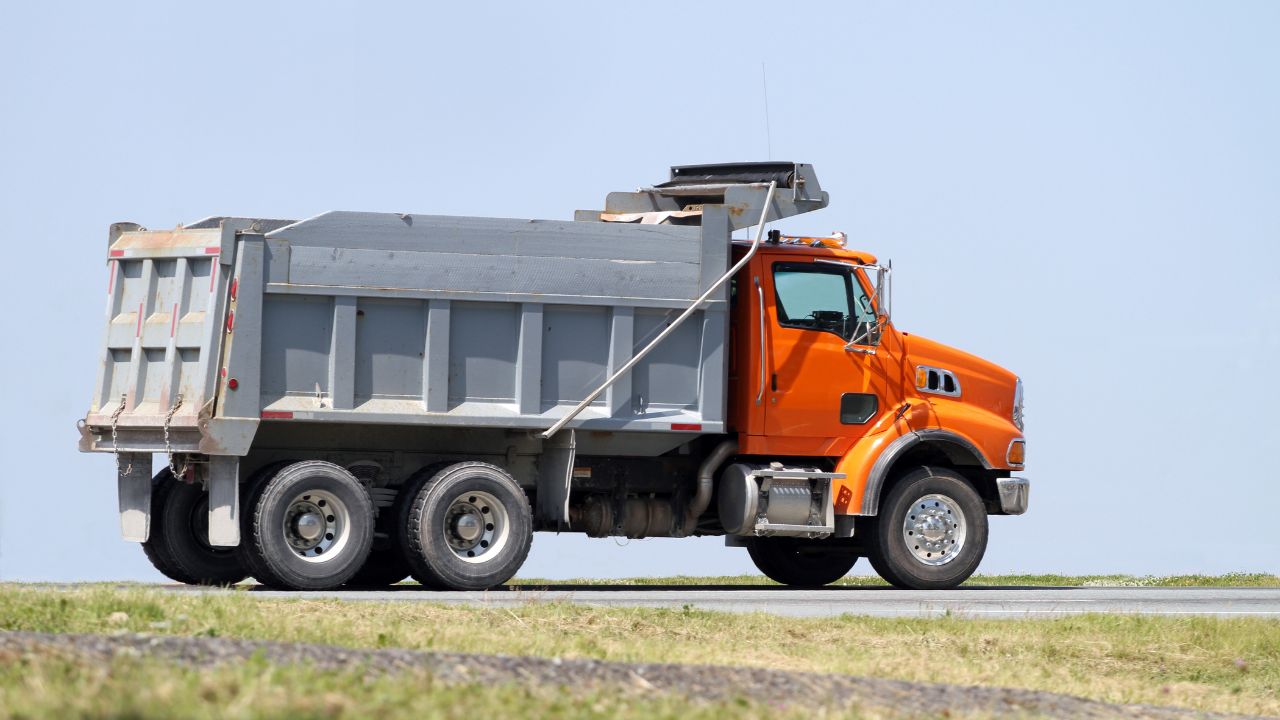
California dump truck operators must secure multiple insurance coverages to satisfy state regulations and contractor mandates. Commercial trucking insurance protects businesses from financial losses resulting from accidents, property damage, and liability claims. Premiums vary significantly based on operational structure, with owner-operators paying $14,000 to $32,000 annually compared to leased operators paying $3,000 to $5,000 for reduced coverage needs.
The commercial auto insurance market in California generated $106.6 billion in written premiums across all lines in 2024. Dump truck operators face strict regulatory oversight from the California DMV and the Federal Motor Carrier Safety Administration. Meeting the requirements for contractor dump truck insurance ensures access to lucrative construction contracts while maintaining legal compliance and protecting business assets from catastrophic financial loss.
Key Takeaways
Commercial trucking insurance comprises multiple coverage types that address distinct operational risks. Owner-operators running under their own Motor Carrier authority require comprehensive protection, including primary liability, physical damage, and general liability. Each coverage type serves a specific function in protecting the business from financial exposure while satisfying regulatory and contractual obligations.
Coverage adoption rates vary significantly based on operational model and risk tolerance. Commercial auto liability maintains near-universal adoption at 95% due to legal mandates. Physical damage coverage sees 70-75% adoption among operators protecting newer vehicles and financed equipment.
Commercial auto liability protects against bodily injury and property damage caused to third parties during operations. This coverage represents approximately 38.5% of total premium spend for most operators. The Combined Single Limit structure provides a single coverage amount for bodily injury and property damage combined rather than separate limits for each category.
Owner-operators with their own Motor Carrier authority must maintain full primary liability coverage. Understanding primary liability vs general liability helps operators structure proper coverage stacks. California mandates a minimum $750,000 CSL for general freight vehicles exceeding 10,000 lbs, with higher limits required for specific cargo types.
Physical damage coverage protects the insured vehicle itself against collision, theft, vandalism, and environmental damage. This coverage represents roughly 22.0% of market premium distribution with adoption rates of 70-75%. Physical damage proves essential for operators with financed vehicles or newer equipment representing significant capital investment.
General liability covers non-auto-related risks such as injuries or property damage occurring at jobsites or business premises. This coverage accounts for 14.5% of premium distribution with 60-65% adoption rates. Private general contractors frequently require $1,000,000 in general liability before allowing dump trucks on construction sites.
Workers' compensation provides medical benefits and wage replacement to employees injured during employment. This coverage represents 11.5% of premium distribution with adoption rates of 50-60%. California requires workers' compensation for businesses employing one or more workers, making it mandatory for fleet operators with hired drivers.
Owner-operators without employees may not be able to use Workers' Compensation policies. Occupational Accident insurance provides similar but more limited benefits than Workers' Compensation at a lower cost. Solo operators should evaluate whether Occupational Accident coverage suits their risk profile and budget constraints.
Fleet insurance allows operators to insure multiple vehicles under a single policy, streamlining administration and billing. This approach provides volume discounts of typically 10-15% compared to insuring each vehicle separately. Fleet policies require three or more vehicles to qualify for consolidated coverage and associated discounts.
Small fleets with 3-5 trucks pay $8,000 to $13,000 per truck annually, depending on loss history. A severe claim on one vehicle in a fleet policy can impact premium costs for the entire fleet at renewal. Operators must weigh administrative convenience and volume savings against the interconnected risk exposure across all fleet vehicles.
Multiple underwriting criteria determine final premium costs for dump truck operators in California. Insurers evaluate operational radius, cargo type, driver qualifications, and vehicle specifications when calculating risk. California dump truck coverage limits required by contracts and regulations directly impact base premium calculations before applying discounts or surcharges.
Market conditions and insurer competition also influence pricing beyond individual risk factors. Progressive Commercial holds 22.5% market share, while State Farm captures 18.0% and The Hartford maintains 12.5%. Operators benefit from comparing quotes across multiple carriers to identify competitive pricing for their specific risk profile.
Owner-operators with their own authority pay $14,000 to $32,000 annually per truck for comprehensive coverage. Leased operators pay $3,000 to $5,000 annually because they only need non-trucking liability and physical damage. Non-trucking liability covers leased operators when not under dispatch, protecting them during personal use of the truck.
Leased operators only need non-trucking liability and physical damage, not full primary liability coverage. Local operations spanning 0-50 miles generally incur lower premiums than regional or interstate hauling. Reduced mileage and familiar routes lower exposure time and accident probability compared to long-haul operations.
Insurers utilize vehicle specifications, including age, weight, and value, to determine physical damage premiums. Older vehicles with lower replacement costs typically receive lower physical damage premiums than newer equipment. Insurers evaluate operating radius to assess exposure time and route familiarity when calculating liability premiums.
Insurers review Motor Vehicle Records and Commercial Driver's License experience to evaluate driver risk. A history of violations or accidents significantly elevates premiums due to demonstrated increased loss probability. Insurers assess cargo type to determine required pollution liability and primary limits based on hazardous material exposure.
Approximately 40-50% of operators opt for higher deductibles to reduce monthly premium obligations. Higher deductibles trade lower premiums for higher out-of-pocket costs in claims events. Between 20-30% of fleets have integrated telematics programs demonstrating safe driving behaviors to qualify for premium discounts.
Budget tier leased operators pay $250-$450 monthly or $3,000-$5,400 annually for minimal coverage. Entry level operators with one truck and established records pay $400-$700 monthly or $4,800-$8,400 annually. Additional strategies to lower commercial truck insurance include driver training programs and safety management systems.
California imposes strict truck insurance regulations through the DMV and Federal Motor Carrier Safety Administration. Minimum liability limits scale based on vehicle weight and cargo classification to ensure adequate financial protection. Contractors and state agencies frequently require coverage exceeding statutory minimums to qualify for specific projects or permits.
Regulatory compliance represents a baseline requirement while contractor mandates often determine practical coverage needs. Understanding what truck insurance is legally required helps operators budget accurately for mandatory coverages. Failure to maintain proper insurance results in permit suspension, contract termination, and significant financial penalties.
Minimum $750,000 CSL is required for general freight vehicles over 10,000 lbs operating in California. Oil transport operations require a minimum $1,000,000 CSL due to increased environmental risk and cleanup costs. Hazardous materials transport requires up to $5,000,000 CSL depending on specific material classifications and quantities.
Hauling standard aggregate including dirt, sand, and gravel presents standard risks requiring basic minimums. Hauling hazardous materials or contaminated soil requires specialized pollution liability beyond primary auto coverage. Operators must verify cargo-specific requirements before accepting loads to ensure adequate coverage exists for transported materials.
Caltrans requires $750,000 coverage for operators with 7 or fewer vehicles working on state projects. The requirement increases to $1,500,000 for fleets with 8-15 vehicles reflecting increased exposure. Caltrans mandates $5,000,000 for fleets of 16 or more vehicles to ensure adequate protection for large-scale operations.
Private general contractors frequently require $1,000,000 in primary auto liability and $1,000,000 in general liability. Additional Insured status and Waiver of Subrogation are specific endorsements required by contractors before allowing access. These endorsements extend the operator's policy to cover the general contractor and prevent subrogation claims after losses.
Motor Carrier Permit requires filing proof of insurance directly with the state through form MC 65 M. Operators must maintain an active MCP, which mandates continuous insurance coverage without lapses. The California DMV suspends operating authority immediately upon notification of policy cancellation or non-renewal from insurers.
Compliance with insurance requirements for new trucking companies begins with obtaining proper Motor Carrier Permits. New operators must secure insurance before applying for permits rather than the reverse sequence. The MCP system ensures all commercial vehicles maintain minimum financial responsibility throughout their operational lifecycle.
Progressive Commercial holds 22.5% market share, leading California's commercial trucking insurance sector. State Farm captures 18.0% of the market while The Hartford holds 12.5% market share. These three carriers dominate the California market, controlling more than half of all commercial auto policies.
Progressive Commercial offers fast quoting processes, large repair networks, and customizable coverage options, attracting owner-operators. State Farm is known for its established customer service and local agent availability, providing personalized support. The Hartford excels in fleet policies and comprehensive coverage bundles, making it popular among multi-vehicle operators.
Consumer priorities heavily influence which carriers succeed in California's competitive commercial trucking insurance market. Premium cost represents 38.5% of consumer priority when selecting insurance providers, reflecting tight profit margins. Coverage breadth accounts for 27.0% of consumer priority as operators seek comprehensive protection meeting all contractual requirements.
Insurer reputation and financial stability represents 17.5% of consumer priority, ensuring claims get paid promptly. Claims process quality comprises 12.5% of consumer priority, as downtime directly impacts revenue generation. These factors that impact truck insurance quotes guide operators toward carriers balancing cost, coverage, and service quality.
The average age of dump truck operators is 47 years old, reflecting an experienced workforce. Older operators aged 50-59 have 70% general liability adoption rates and 78% physical damage adoption rates. Established operators typically carry more comprehensive coverage protecting accumulated business assets and maintaining contractor relationships.
Younger operators aged 18-29 have 92% minimum liability adoption rates, prioritizing cost control over comprehensive protection. Los Angeles Metro and the San Francisco Bay Area have the highest adoption of comprehensive coverage, reflecting contractor requirements. Urban markets with stricter contract requirements drive operators toward enhanced coverage stacks beyond statutory minimums.
Premium cost is 38.5% of consumer priority, driving operators toward competitive pricing and discount programs. Coverage breadth represents 27.0% of consumer priority, ensuring policies meet state, federal, and contractor mandates. Operators seek policies addressing dump truck insurance coverage requirements and risks specific to their operations.
Insurer reputation and financial stability account for 17.5% of consumer priority, protecting against carrier insolvency. Claims process quality represents 12.5% of consumer priority, minimizing vehicle downtime after accidents or damage. Operators increasingly value carriers offering dedicated agents, 24/7 support, and streamlined claims handling, reducing administrative burden.
California dump truck operators must balance regulatory compliance, contractor requirements, and cost control when structuring insurance programs. Understanding regulatory compliance for heavy-duty trucks helps operators avoid penalties while accessing profitable construction contracts. Fleet insurance provides administrative simplicity and volume discounts for operators with three or more vehicles, while individual policies offer customized protection for solo operators.
Strategic coverage decisions directly impact profitability and business sustainability in California's competitive construction market. Operators who maintain clean safety records, implement telematics programs, and carefully balance deductibles achieve optimal premium costs. SoCal Truck Insurance has served the trucking industry for over 20 years, helping operators secure comprehensive coverage meeting California's complex regulatory environment while controlling costs.
You've got contracts to win, deadlines to hit, and rigs to keep moving. The last thing you need is a coverage gap that pulls a truck off a jobsite or costs you a permit. SoCal Truck Insurance handles the hard part for you.
For more than 25 years, we've helped California dump truck operators meet Caltrans mandates, contractor requirements, and DMV minimums without overpaying. Your dedicated agent shops Progressive, Canal, and Infinity to match your operation, whether you run one truck under your own authority or manage a fleet of sixteen. We know the $750,000 CSL rules, the Additional Insured endorsements contractors ask for, and the difference between what you're legally required to carry and what actually protects your livelihood.
You get straight answers, bilingual service, and 24/7 support when a claim hits. No corporate runaround. Contact us for a free quote, or stop by our Downey office at 8135 Florence Ave #101. Let's build coverage that fits how you actually run.