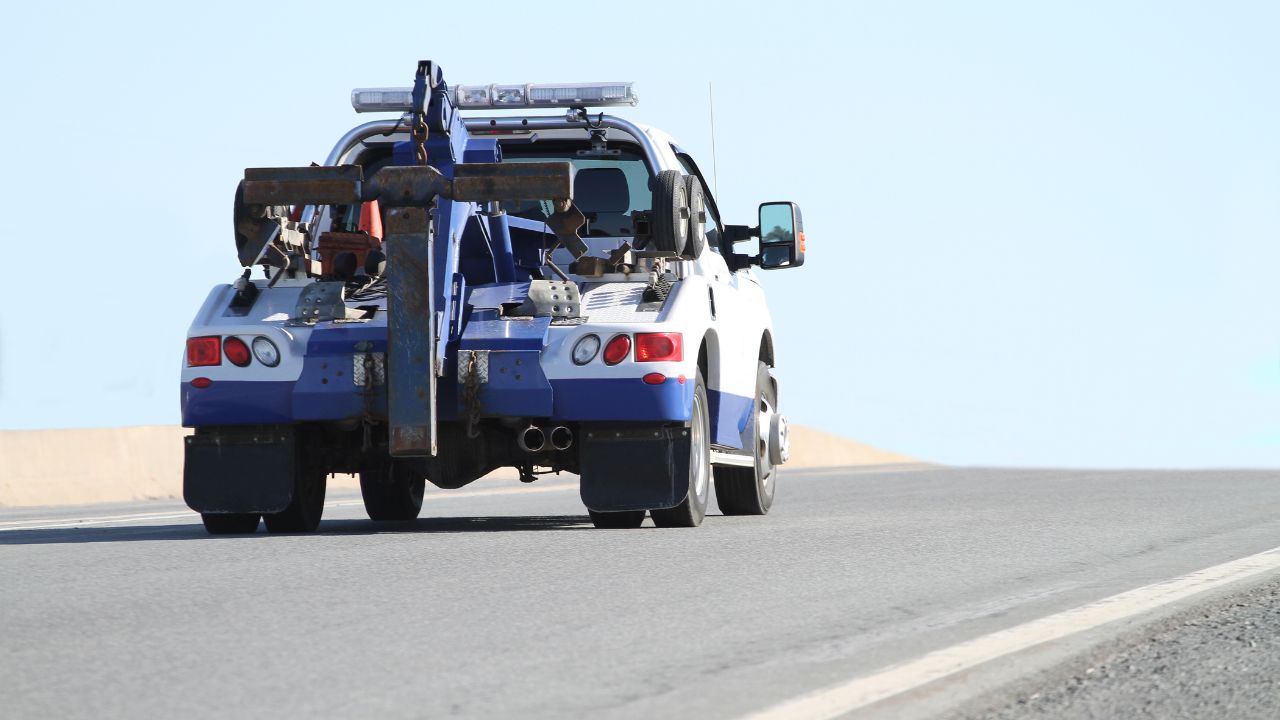
Selecting appropriate tow truck insurance packages requires balancing comprehensive protection against operational costs and business scale. Independent owner-operators face different coverage needs than multi-vehicle fleet managers, making policy structure a critical financial decision. Understanding specific liability exposures inherent to towing operations helps determine whether single-vehicle coverage or fleet insurance solutions better serve your business model. The towing industry reached $8.4 billion in revenue by 2025, with projected growth to $13.7 billion by 2034.
Key Takeaways
Tow truck operations require specialized commercial trucking insurance addressing unique liability exposures beyond standard vehicle policies. Primary coverage types include auto liability, on-hook towing protection, physical damage insurance, garagekeepers liability, and general liability. Each coverage addresses specific operational risks, from third-party injuries during transport to damage while storing customer vehicles.
Auto liability and on-hook towing score highest in priority rankings because they protect against the most financially devastating scenarios.
Auto liability insurance provides mandatory protection against third-party bodily injury and property damage caused during towing operations. This coverage scores 100 in insurance priority ranking, making it the foundation of any truck insurance policy. When accidents occur, auto liability responds to medical expenses, legal defense costs, and settlement obligations.
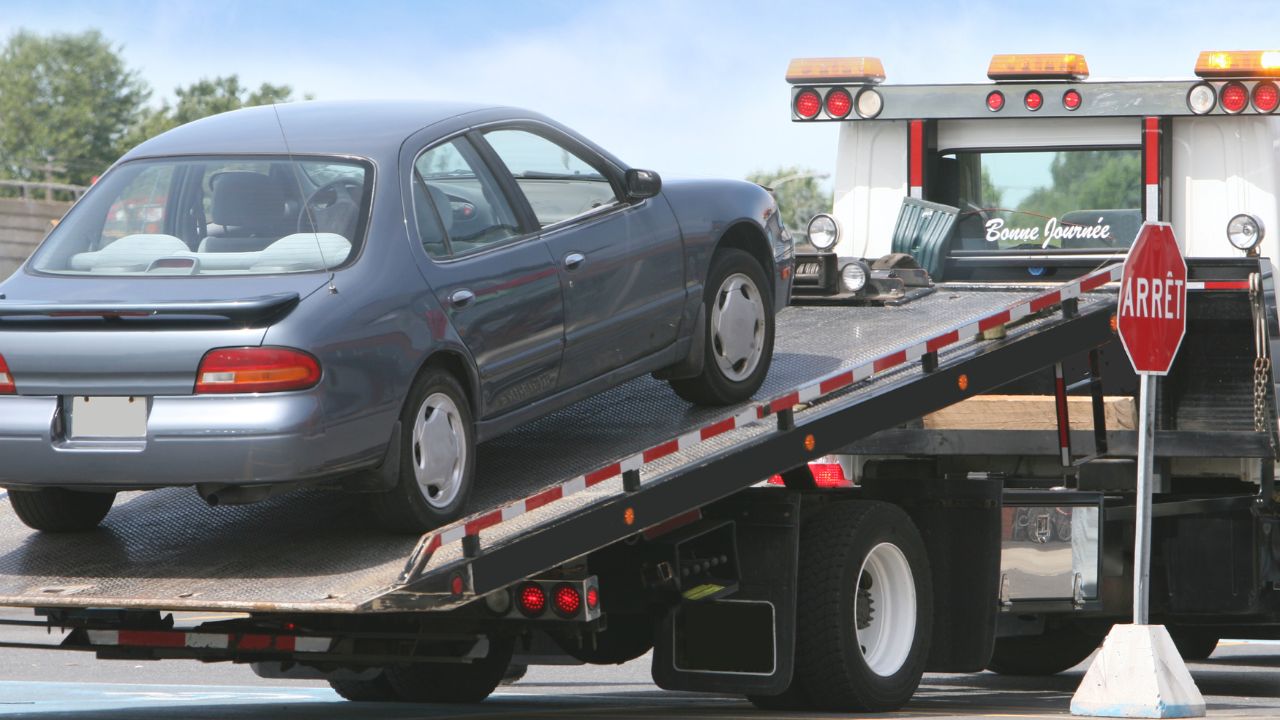
On-hook towing coverage specifically protects non-owned vehicles while transported on the tow truck's equipment. Scoring 90 in priority ranking, this protection addresses damage to customer vehicles during transit. How to find affordable coverage for tow trucks in California becomes easier when operators understand how on-hook limits should align with the value of vehicles typically towed.
Physical damage coverage protects the operator's own tow truck equipment against collision, theft, fire, and vandalism. Scoring 85 in priority ranking, this coverage safeguards the primary income-generating asset. Given that replacement costs for specialized towing equipment can exceed $100,000, physical damage insurance prevents business failure following total loss.
Garagekeepers liability protects against damage to customer vehicles stored on the operator's premises or impound lot. This coverage scores 80 in priority ranking and responds when vehicles suffer damage from fire, theft, or collision while under the operator's care.
General liability insurance protects against premises-related claims occurring outside vehicle operations. Scoring 60 in priority ranking, this coverage addresses slip-and-fall injuries, property damage during vehicle recovery, and advertising injury claims. General liability fills coverage gaps left by auto liability policies, which only respond to vehicle-related incidents.
This coverage also protects against claims from non-vehicular equipment use during recovery operations.
Single truck insurance policies provide customized coverage for independent owner-operators managing one to four vehicles. Each truck receives an individual underwriting evaluation, with premiums calculated based on specific vehicle characteristics, driver experience, and operational use. Fleet insurance solutions evaluate the collective risk profile of five or more vehicles under unified policy terms.
The fundamental difference lies in rating methodology and administrative approach rather than available coverage types. Single policies offer maximum flexibility for independent operators with diverse equipment. Fleet structures prioritize cost efficiency and simplified administration for businesses managing standardized vehicle types.
Single truck insurance ranges from $5,400 to $7,440 annually for standard towing operations involving basic roadside assistance and transport. High-risk activities like vehicle repossession can exceed $10,000 annually due to elevated liability exposure. How to get accurate tow truck insurance quote requires detailed operational information to properly assess individual vehicle risk factors.
Single-truck policies have higher per-unit costs but deliver maximum customization for non-standard operations. Adding vehicles creates an administrative burden through multiple policy anniversaries and renewal dates. Independent operators value the ability to tailor coverage limits precisely to each truck's usage pattern.
Fleet insurance evaluates overall fleet risk rather than pricing each truck individually. This approach offers bulk discounts of 15-25%, bringing per-truck costs to $6,000-$8,000 annually compared to single vehicle coverage. Unified policy structure means one renewal date, one set of declarations, and simplified certificate issuance.
Administrative efficiency allows fleet managers to add or remove vehicles through simple policy endorsements rather than negotiating new contracts. Fleet insurance vs individual truck policies comparison shows that economies of scale become significant starting at five vehicles.
Fleet insurance typically becomes available for operations with five or more vehicles under common ownership. The transition threshold should factor in both cost savings potential and administrative complexity. Operators approaching this vehicle count should obtain fleet quotes at least 90 days before current policy renewals. Mixed-use fleets combining tow trucks with other commercial vehicles can often qualify for fleet treatment under a single policy.
Tow truck insurance premiums reflect complex calculations incorporating claim history, driver demographics, equipment values, and operational risk factors. External market forces, including nuclear verdicts, inflation, and regulatory changes, have driven unprecedented rate increases. Common misconceptions about tow truck insurance often involve assuming clean driving records alone guarantee stable premiums. Market-wide factors now dominate individual loss experience in determining available coverage and pricing.
Nuclear verdicts are massive jury awards exceeding $10 million in commercial trucking accidents. These catastrophic judgments force insurers to increase reserves and raise premiums across all policyholders to maintain solvency. Commercial auto premiums increased for over 45 consecutive quarters.
Rates increased 15% between 2022 and 2023 as insurers responded to initial verdict trends and inflation impacts. Acceleration continued with a 22% rate increase between 2023 and 2025. The cumulative rate increase of 37% over the four-year period 2022-2026 reflects insurers' repricing of entire books of business to sustainable loss ratios.
Gen X comprises 40.8% of the trucking workforce, representing the most experienced segment with established safety records. Millennials account for 30.7% of the trucking workforce. Baby Boomers represent 20.7% but are rapidly retiring, removing decades of institutional knowledge.
Gen Z makes up 7.5% of the trucking workforce, representing the newest and least experienced operator segment. The shortage of experienced drivers forces fleets to hire younger, less experienced operators, increasing the overall risk profile. Factors affecting tow truck insurance rates include driver age, experience level, motor vehicle record, and prior claim history at both individual and fleet levels.
CARB mandates that trucks operating in California must have engines from model year 2010 or newer to meet emissions standards. This requirement forces fleet modernization, increasing equipment values and corresponding physical damage insurance costs. Newer trucks often incorporate advanced driver assistance systems and expensive sensors that elevate repair costs.
California's strict liability environment and higher litigation rates contribute to elevated premium pricing compared to other states. Cargo theft has reached record highs in California, prompting insurers to apply stricter underwriting criteria. Regional pricing variations can result in 25-40% premium differences between California and lower-risk states for identical operations.
Proper load securement directly influences accident frequency, claim severity, and liability exposure for flatbed tow truck operations. FMCSA cargo securement regulations establish minimum performance standards that equipment must satisfy to prevent shifting, loss, or spillage. The importance of commercial auto insurance for tow trucks extends beyond basic liability to encompass cargo securement liability that can trigger both property damage and bodily injury claims.
Equipment selection between chains, straps, and binders involves balancing working load limits, ease of use, and failure modes.
Lever binders use a lever and tension hook to tighten the chain through mechanical advantage. Ratchet binders use a ratcheting mechanism with cam and pawl components for controlled, incremental tensioning. Lever binders provide quick unbinding and high strength, but require manual force with snapback injury risk.
Ratchet binders offer controlled, incremental tensioning and safer operation through gradual pressure release. These units are slower to apply and release, impacting productivity. Synthetic webbing is gentler on cargo, lower cost, and safer tension release, but has a lower working load limit than chains and is susceptible to UV and chemical damage.
Working Load Limit measures the maximum load that can be safely applied to securement equipment without failure risk. FMCSA requires cargo securement to withstand 0.8 g deceleration in the forward direction. Documented compliance demonstrates due diligence that can reduce liability exposure following load shift incidents.
Failure to comply with FMCSA regulations results in fines and increases liability exposure by establishing negligence per se in litigation. Insurers may deny coverage when accidents result from willful regulatory violations. Regular equipment inspection records and driver training documentation provide evidence of compliance efforts that support coverage defenses.
Grade 70, 80, or 100 refers to high-strength steel chain classifications with progressively higher working load limits. Higher-grade chains cost more initially but provide greater safety margins and longer service life. The significant risk of snapback injuries with lever binders has driven many operators toward ratchet mechanisms despite slower operation speeds.
Ratchet straps have lower working load limits than equivalent-length chains, limiting their use to lighter cargo applications. Synthetic straps remain susceptible to UV and chemical damage that degrades strength over time without visible indicators. Equipment selection should prioritize adequate working load limits for specific cargo types over cost minimization.
Coverage adequacy for specific operational risks encountered daily represents the primary selection criterion. Secondary priorities include insurer financial stability, claims handling reputation, and premium competitiveness within acceptable coverage parameters. Operators recognize that the lowest premium rarely delivers the best value when claim denials or coverage gaps create uninsured exposure.
Access to knowledgeable insurance professionals who understand towing operations eliminates the need for extensive self-education on coverage nuances. Telematics and data technology to lower tow truck insurance costs represents an emerging priority as operators seek demonstrable ways to combat premium increases.
On-hook towing coverage protects operators against their most frequent claim exposure involving damage to customer vehicles during transport. Standard auto liability excludes damage to property in the insured's care, custody, or control, creating coverage gaps. Adequate on-hook limits should reflect the value of vehicles typically towed, with a $100,000 minimum recommended for standard passenger vehicles.
Garagekeepers liability extends protection to vehicles stored on the operator's premises between initial tow and final disposition. This coverage responds to fire, theft, vandalism, and collision damage while vehicles await owner retrieval or auction. Operations maintaining impound lots face significantly higher exposure requiring dedicated garagekeepers' limits beyond basic on-hook coverage.
Budget constraints remain the top consideration for independent owner-operators managing tight profit margins. Premium affordability must be balanced against the financial catastrophe potential of a single uninsured claim. Operators increasingly focus on deductible optimization, accepting higher self-insured retention in exchange for meaningful premium reductions.
Coverage customization allows operators to allocate premium dollars toward the protection types most relevant to their specific operations. Repossession specialists require different liability limits than roadside assistance providers.
Implementing dash cams and telematics systems documents safe driving behavior that supports premium discount programs and claim defenses. Forward-facing cameras capture road conditions and traffic situations that cause accidents, providing objective evidence against fraudulent claims. Driver behavior monitoring, including harsh braking, acceleration, and cornering patterns, enables coaching interventions before incidents occur.
Insurers increasingly offer usage-based insurance programs incorporating telematics data into premium calculations. Real-time GPS tracking verifies that vehicles operate within approved territories specified in the policy. Event data recorder information becomes crucial evidence in a nuclear verdict defense by demonstrating reasonable speeds and appropriate driver responses.
Strategic equipment purchasing decisions influence both initial capital expenditure and ongoing insurance premiums through physical damage coverage costs. Selecting appropriate load securement equipment reduces liability claim frequency while satisfying regulatory compliance requirements. Total cost of ownership analysis should incorporate insurance implications alongside purchase price and operational efficiency.
Bulk purchasing programs for both equipment and insurance deliver economies of scale that reduce per-unit costs. Cost-saving strategies for California tow truck operators extend beyond premium shopping to encompass comprehensive risk management and loss control investments.
Budget tier ratchet straps cost $14-$25 per unit, providing basic securement for light-duty applications. Entry-level lumber hauling kits cost approximately $1,100. Mid-range Grade 70 chain and binder kits cost $62-$92, offering improved durability and working load limits for regular commercial use.
Comprehensive steel hauling kits cost approximately $1,725, incorporating heavy-duty chains, ratchet binders, and edge protectors. High-capacity Peerless chains cost $118 and above per piece, providing maximum working load limits for heavy machinery transport. Premium equipment investment reduces replacement frequency and liability exposure, offsetting higher initial costs through extended service life.
Fleet insurance solutions deliver 15-25% bulk discounts compared to aggregated individual policy premiums for equivalent coverage. These savings result from administrative efficiency, unified risk management, and reduced underwriting costs per vehicle. Five-vehicle operations achieve modest discounts, while fleets exceeding ten vehicles access the most significant pricing advantages.
Multi-policy bundling, combining fleet auto coverage with general liability and property insurance, generates additional premium reductions. Annual premium payment rather than monthly installments eliminates financing charges that can add 15-20% to total annual costs. Demonstrable safety programs, including driver training, vehicle maintenance protocols, and accident review processes, support favorable renewal pricing.
Cost ranks highest in equipment selection at 28% of decision factors for budget-conscious operators. Strategic deductible increases on physical damage coverage can reduce premiums 10-30%, depending on self-insured retention levels selected. Operators with strong cash reserves should evaluate $2,500 or $5,000 deductibles versus standard $1,000 retention amounts.
Loss control investments, including driver training, vehicle dashcams, and regular equipment maintenance, demonstrate proactive risk management that supports premium negotiations. Claims-free discount programs reward consecutive policy periods without losses through graduated premium reductions reaching 15-25% at maximum tiers. Maintaining continuous coverage without lapses preserves a favorable underwriting classification.
The tow truck insurance market faces fundamental restructuring driven by persistent underwriting losses and capacity constraints among commercial auto carriers. Several major insurers have withdrawn from commercial trucking lines entirely, reducing competition and available capacity. Remaining carriers implement stricter underwriting criteria, higher minimum premiums, and reduced coverage limits.
Technology adoption, including telematics, artificial intelligence claim processing, and predictive analytics, influences both underwriting decisions and premium calculations. Electric vehicle proliferation creates new technical challenges for towing operations.
The U.S. automobile towing industry reached $8.4 billion in revenue by 2025. The towing market is expected to reach $13.7 billion by 2034, with 5.6% compound annual growth rate driven by increasing vehicle miles traveled. Flatbed truck market valued at $1.2 trillion in 2024, projected to reach $1.9 trillion by 2030 with 7.8% growth rate.
Flatbed trailer market valued at $7.67 billion in 2024, anticipated to reach $10.54 billion by 2033. Chains and binders represent 45-50% of the mid-range market tier, dominating heavy-duty securement applications. Synthetic strap adoption continues growing in light-duty segments due to lower costs and reduced injury risks.
Record highs in cargo theft, particularly in California, have prompted stricter insurance requirements and higher deductibles. CARB emissions mandates requiring 2010 or newer engines force ongoing fleet modernization, affecting equipment values and insurance costs. FMCSA cargo securement rule enforcement has intensified with higher fine amounts and out-of-service order frequency for violations.
Nuclear verdict trends show no signs of abating, with average commercial vehicle liability awards continuing on an upward trajectory annually. Social inflation, driven by aggressive plaintiff attorney advertising and third-party litigation funding, increases claim severity beyond actual damage amounts. California's strict comparative negligence framework and generous pain and suffering awards create elevated liability exposure compared to tort reform states.
Telematics systems provide real-time driver behavior monitoring that enables usage-based insurance pricing and immediate coaching interventions. Artificial intelligence algorithms analyze claim patterns to identify fraud indicators and expedite legitimate claim processing. Predictive analytics, incorporating weather data, traffic patterns, and historical loss information, helps insurers price risk more accurately.
Advanced driver assistance systems, including automatic emergency braking and lane departure warning, reduce accident frequency but increase repair costs. Electric vehicle adoption creates new technical training requirements for tow truck operators while potentially reducing long-term maintenance expenses.
Single vehicle coverage delivers maximum flexibility for independent operators managing diverse equipment types and specialized operational niches. Customized policy terms accommodate unique risk profiles, including repossession work, heavy-duty recovery, or exotic vehicle transport. Administrative simplicity matters less when managing only one or two policies.
Fleet insurance solutions become compelling at five vehicles when bulk discounts offset reduced per-vehicle customization flexibility. Unified policy administration eliminates multiple renewal dates, carrier relationships, and certificate management complexity. Operations planning fleet expansion should transition to a fleet structure proactively, rather than managing multiple individual policies.
Hybrid approaches combining a fleet policy for standard tow trucks with separate individual coverage for specialized equipment preserve both cost efficiency and customization. Owner-operators approaching the five-vehicle threshold should obtain comparative quotes analyzing break-even points between structures.
SoCal Truck Insurance has served California towing operations for over two decades, understanding the unique challenges independent operators and fleet managers face daily. The dramatic premium increases and capacity constraints require experienced guidance to secure adequate liability protection at sustainable costs. Working with specialists who understand towing operations ensures coverage gaps don't emerge during the claim process.
Building relationships with dedicated agents rather than generic call centers provides the expertise needed to navigate complex coverage decisions. Proactive risk management, combining proper load securement equipment, driver training, telematics implementation, and appropriate insurance structure, positions tow truck businesses for long-term success.
Whether you're running a single rig or managing a growing fleet across Southern California, SoCal Truck Insurance helps you put the right coverage in place without overpaying for protection you don't need. Our specialists have spent 25+ years placing auto liability, on-hook, garagekeepers, and physical damage policies for tow truck operators throughout Los Angeles, the Inland Empire, Orange County, and beyond. We shop multiple carriers — including Progressive, Canal, and Infinity — to match your operation with terms that hold up at claim time.
Talk to a dedicated agent about single-vehicle or fleet options today. Contact us for a free quote, available 24/7 in English and Spanish, and find out how the right policy structure can lower your premium while keeping your business fully protected.