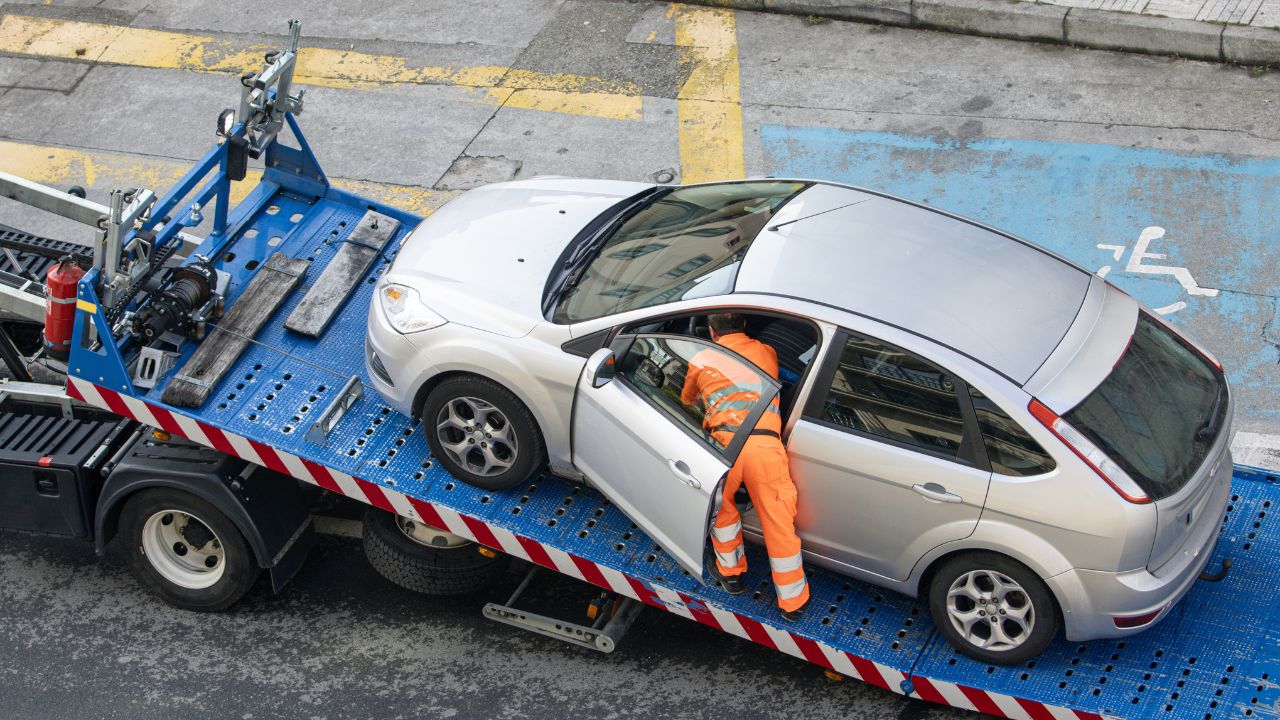
Tow operators face distinct risks at different stages of every job. Understanding which insurance policy responds during transport versus storage prevents financial disasters that can end your business overnight.
On-hook coverage and garage liability serve separate functions in protecting towing operations. Confusing these coverages or assuming one policy covers all exposures leaves operators personally liable for damages that could exceed six figures.
Key Takeaways
On-hook towing insurance covers physical damage to a customer's vehicle while it is being towed, loaded, or unloaded. This policy responds from the moment you connect the vehicle to your truck until you disconnect it at the destination.
The coverage protects against damage the customer's vehicle sustains during the active towing process. Typical on-hook coverage limits range from $50,000 to $250,000 depending on the value of vehicles your operation handles.
On-hook policies cover collision, rollover, fire, theft, vandalism, and explosion during transit. These perils represent the most common risks towed vehicles face while attached to your equipment or being moved.
Mechanical breakdown, cargo inside the vehicle, wear and tear, and vehicles in storage are excluded from on-hook coverage. The policy only responds to sudden, accidental damage occurring during the active towing operation.
On-hook coverage adoption reaches 92% among urban operators compared to 68% for rural operators. Urban areas see higher adoption due to increased traffic density, higher-value vehicles, and greater exposure to transit-related incidents.
Every operator physically towing non-owned vehicles needs this protection regardless of fleet size. Light-duty roadside assistance providers and heavy-duty recovery operations both face substantial financial risk without adequate on-hook limits.
Commercial auto liability protects against bodily injury and property damage caused to third parties while operating the tow truck. This truck insurance covers incidents like rear-ending another vehicle or causing property damage during roadside operations.
Garage liability extends protection to your business premises, covering third-party injuries and property damage at your facility. A customer slipping in your dispatch office or a visitor's vehicle damaged in your parking area falls under garage liability.
Garagekeepers coverage protects damage to customer vehicles while stored at the operator's facility, including lots, yards, or impound locations. Fire, theft, vandalism, and weather-related incidents at the storage lot are covered perils under this policy.
Damage occurring while the vehicle is being towed falls outside garagekeepers' coverage and requires on-hook protection. This critical distinction creates the most common coverage gap in towing insurance differences.
Garagekeepers insurance becomes necessary any time customer vehicles are held overnight or stored at an operator-controlled facility. Operators running impound yards, providing long-term storage, or holding vehicles pending repairs must carry this coverage.
Annual premiums for garagekeepers coverage range from $1,000 to $3,500 based on lot capacity and security measures. The cost remains minimal compared to the potential liability for multiple vehicles damaged in a single incident.
On-hook coverage protects the towed vehicle, while garage liability covers third-party property damage and bodily injury. The on-hook policy does not respond when vehicles are in storage, creating a gap that garagekeepers' insurance fills.
Coverage gaps exist between on-hook and garagekeepers insurance at the exact moment you disconnect the vehicle at your facility. Understanding where one policy ends and another begins prevents liability protection failures.
On-hook coverage is active during hookup, transit, and unloading of the customer's vehicle. Garagekeepers coverage becomes active once the vehicle is disconnected and remains parked at your facility.
The handoff point between these two policies represents the highest risk for coverage disputes. Operators must maintain both coverages to eliminate gaps in the complete service lifecycle.
An on-hook claim occurs when a towed car is rear-ended during transit on the freeway. The on-hook policy responds to repair or replace the customer's vehicle up to policy limits.
A garage liability claim happens when a customer slips and falls in the dispatch office, requiring medical treatment. A garagekeepers claim applies when stored vehicles are damaged in a lot of fire, requiring repairs for multiple customer vehicles.
California requires minimum coverage of $15,000 per person, $30,000 per accident, and $5,000 property damage for bodily injury liability. These state minimums are rarely sufficient for commercial trucking insurance operations handling high-value vehicles.
Commercial towing operations typically need substantially higher limits to protect against realistic claim scenarios. A single accident involving injury and vehicle damage can easily exceed state minimums by multiples.
CHP rotation programs require a minimum of $100,000 on-hook coverage for operators seeking participation. These programs also mandate $50,000 minimum garagekeepers coverage to protect vehicles during impound storage.
Rotation program participation offers lucrative contracts but demands strict compliance with equipment standards and insurance requirements. Operators failing to maintain required coverage face immediate removal from rotation lists.
Motor Carrier Permit liability requirements range from $300,000 to $5,000,000 depending on operation type and cargo. The Motor Carrier Permit remains legally required to operate commercially in California.
Operators must obtain a Carrier Identification Number from the CHP and provide proof of insurance meeting MCP standards. Workers' compensation coverage also becomes mandatory when hiring employees.
On-hook coverage limits range from $50,000 to $250,000 with annual premiums between $600 and $2,400. Garagekeepers premiums range from $1,000 to $3,500 annually based on lot capacity and security measures.
Average commercial auto premiums reach $8,839 annually, or $737 per month, for a single truck operation. These costs represent substantial fixed expenses that directly impact operator profitability and coverage affordability.
Cost and premium rates represent the priority for 35% of operators selecting coverage. Coverage scope drives decisions for 25% of buyers, while claims process efficiency matters most to 20% of operators.
Deductible options influence 12% of purchasing decisions, allowing operators to balance upfront costs against out-of-pocket expenses. Provider reputation affects 8% of decisions, particularly regarding financial stability and industry expertise.
An operator towed a vehicle for overnight impound when an electrical fire damaged three vehicles in storage. The operator carried $100,000 on-hook coverage but no garagekeepers liability, resulting in $140,000 in uninsured damages.
The on-hook policy did not respond because vehicles were no longer being towed at the time of loss. This gap demonstrates why operators must maintain both coverages throughout the complete service lifecycle.
Under-limiting on-hook coverage creates exposure as vehicle values continue rising across all segments. Failing to carry garagekeepers insurance entirely leaves operators personally liable for all storage-related damages.
Electric vehicles carry higher repair costs, requiring on-hook limits that reflect current market values rather than historical benchmarks. Delayed claims processing can severely impact business continuity when operators lack adequate custom coverage limits.
Electric vehicles require higher on-hook limits due to battery replacement costs often exceeding $15,000 per vehicle. Regular coverage reviews reduce exposure as fleet size and storage volume change over time.
Operators should conduct annual policy audits to ensure limits match current vehicle values and storage capacity. Proactive risk management prevents coverage gaps from developing as business operations evolve.
Motor Carrier Permits require commercial auto liability coverage to operate legally in California. This foundational coverage protects against third-party injury and property damage while operating on public roadways.
Mandatory coverage represents the minimum protection operators need before considering specialized coverages. State enforcement of MCP requirements makes compliance non-negotiable for legal operation.
Commercial auto liability excludes damage to the customer's towed vehicle and the operator's own truck. Separate physical damage coverage fills this gap by protecting the operator's equipment from collision and comprehensive perils.
On-hook coverage completes the protection triangle by addressing customer vehicle damage during transit. These three coverage types work together to eliminate gaps in financial protection.
Bundled packages combining liability, physical damage, on-hook, and garagekeepers coverage are growing in adoption versus individual policies. Bundling often reduces administrative burden and provides premium discounts compared to separate policy purchases.
Operators benefit from simplified coverage management when working with a single carrier for all protection types. Coordinated coverage eliminates potential disputes between multiple insurers during complex claims.
Understanding the differences between garage liability and on-hook coverage protects tow operators from catastrophic financial losses. Maintaining appropriate coverage at every stage of the towing process ensures business continuity when accidents occur.
At SoCal Truck Insurance, we help tow operators build complete protection programs that eliminate coverage gaps while controlling costs. Our team understands the specific risks facing California operators and structures policies that respond when you need them most.
Choosing between garage liability and on-hook coverage is rarely an either/or decision — most tow operators need both working together to stay fully protected on the lot and on the hook. SoCal Truck Insurance has spent more than 25 years helping Southern California tow operators build coverage that fits the real risks of the job, from a customer's vehicle damaged in your yard to a car dropped mid-tow.
Our dedicated bilingual agents shop multiple carriers, including Progressive, Canal, and Infinity, so you get the right protection at a fair price — never a one-size-fits-all policy. We're available 24/7 because breakdowns, claims, and coverage questions don't wait for business hours. Get a free quote today and lock in the exact mix of garage liability and on-hook coverage your tow business needs.