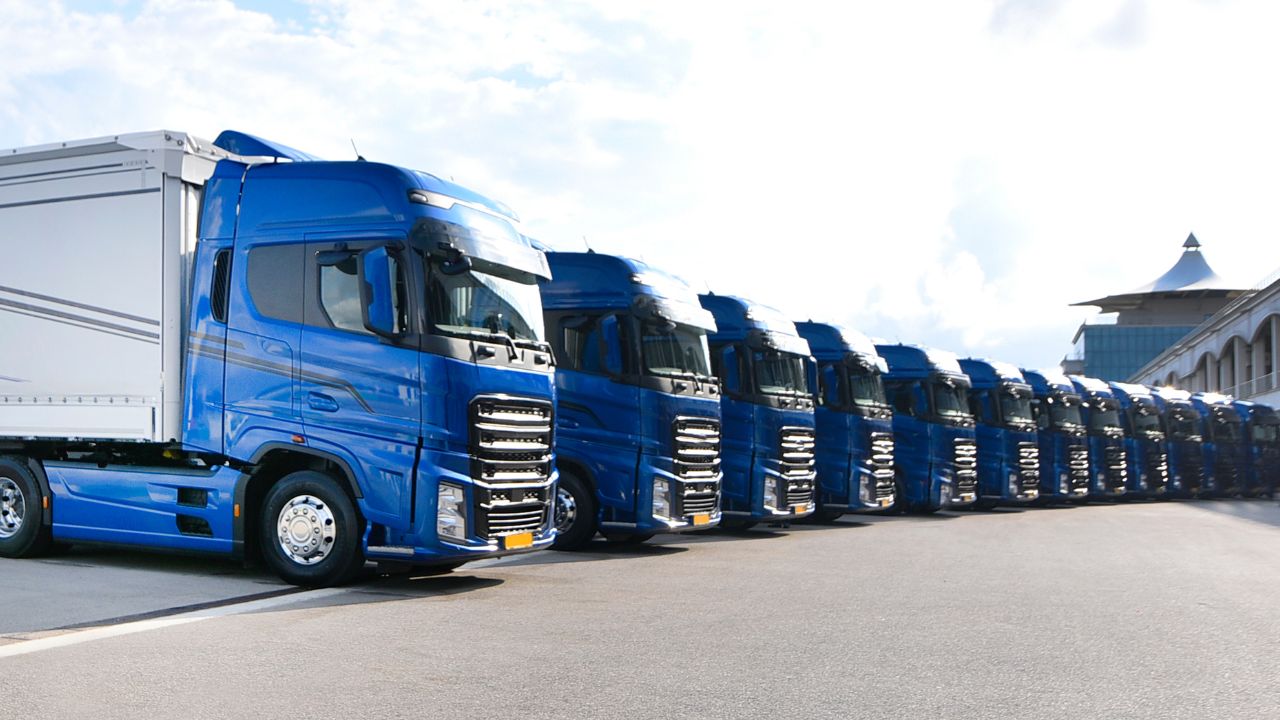
Every time your fleet gains or loses a truck, your insurance has to keep up. Whether you just bought a new unit or sold one you no longer need, the way your carrier handles those mid‑policy changes determines what you pay and whether you're actually covered. This article walks through the mechanics of adding and removing trucks from an active commercial truck coverage policy — how endorsements work, what paperwork you need, how pricing shifts, and where carriers most commonly catch gaps. If your operation is in the middle of fleet expansion or downsizing, this is what you need to know before the next unit hits the road.
Key Takeaways
A mid‑policy change is any modification to your active insurance term — adding a truck, removing one, or swapping equipment — without waiting for renewal. Carriers handle these through endorsements that update your schedule of autos and recalculate your premium in real time. Understanding how this process works helps you avoid gaps in commercial truck coverage and unexpected charges.
An endorsement is a formal amendment to your existing policy. When you add or remove a truck, your carrier updates the schedule of autos, adjusts the premium, and issues a revised declarations page. The rest of the policy — liability limits, cargo coverage, deductibles — stays intact.
This is one of the core advantages of a fleet policy. When onboarding new vehicles or drivers, the existing policy is updated rather than written from scratch. You keep the same policy number, the same term dates, and the same coverage structure. The only things that change are the units listed and the price. A full rewrite only becomes necessary when the change is so fundamental — like switching carriers or restructuring the business entity — that an endorsement can't accommodate it.
Renewals give underwriters a clean slate to reprice the entire account. Mid‑policy changes don't. When you add a truck mid‑term, you're increasing the carrier's risk exposure during a period they've already priced and committed to. That's why math works differently.
For additions, the standard mechanism is a pro‑rata premium adjustment. You pay only for the portion of the term the new truck is covered. The formula is straightforward: Pro Rata Premium = Total Policy Premium × (Remaining Days ÷ Total Policy Days). If a truck with a $12,000 annual premium is added at the six‑month mark, you owe roughly $6,000.
For deletions, the process reverses — but not always cleanly. Pro‑rata return premiums are standard when the carrier initiates the cancellation. When you initiate a truck removal policy change yourself, a short‑rate penalty often applies. That penalty lets the insurer retain around 10% of the unearned premium to offset administrative costs. The penalty percentage generally decreases the longer the policy has been in effect.
Choose a mid-term conversion when a newly acquired truck needs to be on the road immediately, and waiting for renewal would leave it uninsured. Choose to wait for renewal when the truck won't be in service yet, and you want to avoid pro-rata adjustments and let the underwriter reprice the full account at once.
Every carrier needs the same core data to process a mid‑term endorsement. At a minimum, expect to provide the VIN, year, make, and model of the vehicle along with its cost or stated value. You'll also need to specify the intended use, radius of operation, and garaging address — the location where the truck is primarily parked when not in use.
Driver information matters too. The carrier will want the assigned driver's name, CDL class, and current Motor Vehicle Record. Some insurers bundle all of this into a single Fleet Insurance Supplemental Application that captures vehicle details, driver data, and operational specifics in one form. Having this information ready before the truck arrives at your yard is the fastest way to avoid a coverage gap during fleet expansion.
Fleets rarely stay the same size for a full twelve months. Trucks get bought, sold, wrecked, and parked depending on what the business needs. Each of those changes triggers a mid-policy endorsement that adjusts coverage and premiums. The reasons behind the change matter because they affect how the carrier processes it and what it costs.
Growth is the most common trigger. Adding a second or third truck is where most small carriers first encounter mid-policy changes. Fleet definition thresholds range from 2 to 5 vehicles, depending on the insurer, with 5 being the most frequently cited industry average. Once you cross your carrier's threshold, you may qualify for fleet-rated pricing that lowers the per-truck cost.
Seasonal work creates a different dynamic. Carriers hauling agricultural products, construction materials, or holiday freight often scale up for part of the year and scale back after. These fleets need policies flexible enough to handle fluctuating vehicle counts without triggering penalties or leaving gaps. Contract loss works in the opposite direction — losing a dedicated lane or a major customer may mean selling or parking a unit, which triggers a deletion endorsement and a return premium calculation.
A truck you own still carries liability even if it never leaves the yard. Removing an owned vehicle from your policy without careful consideration is risky because exposure doesn't disappear just because the engine is off. A parked truck can still be stolen, operated without authorization by an employee, or involved in an injury to someone near the vehicle. Each of those scenarios creates a claim with no coverage behind it if the unit has been deleted from the schedule.
Before dropping coverage entirely, talk to your agent. There may be a way to reduce the premium — switching to comprehensive-only or storage coverage, for example — without removing all protection. The goal is to eliminate the cost of coverages you don't need while keeping the ones that protect you from low-probability, high-cost events.
The most common mistake is delay. Changes are not effective until the carrier receives official notice, so a truck that hits the road before the endorsement is processed has no coverage. If that truck is involved in an incident, the claim gets denied.
Unscheduled vehicles and drivers create the same problem from the compliance side. An unlisted unit can trigger regulatory violations under FMCSA's MCS-90 endorsement, increase the company's liability exposure, and give the carrier grounds to cancel the policy entirely. The fix is simple but requires discipline: notify your agent the day a vehicle is acquired or a driver is assigned, not the day after something goes wrong. The same applies to leased or rented equipment — verify coverage is in place before the unit enters service, not after.
Adding and removing trucks may look like mirror-image transactions, but the coverage implications are different. An addition requires you to confirm every line of coverage on the new unit. A deletion is simpler on paper, but it can quietly change your pricing or leave a lienholder exposed if the paperwork isn't handled correctly.
Start with liability. The FMCSA minimum is $750,000 for non-hazardous freight on vehicles over 10,001 lbs, but that floor is rarely enough in practice. Most freight brokers and shipper contracts require at least $1 million in combined single limits, and 83% of truck/tractor/trailer premiums are already written at that level. If your policy carries $1 million limits, every new unit added to the schedule inherits those limits automatically.
Physical damage is the next line to confirm. If the truck is leased or financed, the lender will almost certainly require physical damage coverage — collision, fire, theft, vandalism, and hail. Even on owned units, physical damage is worth evaluating. The physical damage combined ratio improved to 88.6% in 2024, making it the most competitively priced coverage line in commercial auto. That means carriers are profitable, writing it, which often translates to reasonable premiums for the insured.
Cargo coverage and radius of operation should be verified for each added unit individually. A truck running local routes under 300 miles has a different risk profile than one hauling long-haul freight at 500-plus miles, and the premium reflects that difference.
Most of your coverage structure stays in place when a truck comes off the schedule. Liability limits, cargo coverage, and hired/non-owned auto apply to the fleet as a whole, not to individual units, so they don't change when one vehicle is deleted.
What needs updating is the vehicle schedule itself, the driver list if the assigned driver is also leaving, and any lender or lienholder interest tied to the deleted unit. If a financed truck is sold, the carrier needs confirmation that the lienholder has been removed from the policy. Overlooking this creates administrative problems at renewal and can delay future endorsements.
One less obvious consequence is the potential loss of discounts. Removing a vehicle or its assigned driver may eliminate a safe-driving-record discount or a multi-vehicle credit, which can push the per-truck cost up on the remaining units. Ask your agent to run the numbers before finalizing a deletion so the premium impact doesn't catch you off guard.
Yes, depending on the carrier. Some insurers offer a reduced coverage option — sometimes called comp-only or storage-only — that drops liability and collision but retains comprehensive protection for fire, theft, and vandalism. The truck stays on the schedule at a fraction of the full premium.
This makes sense for seasonal units parked for extended stretches, trucks waiting to be sold, or equipment temporarily sidelined for repairs. It keeps the asset protected without paying for liability coverage on a vehicle that isn't moving. Not every carrier offers this option, and the terms vary, so confirm availability and pricing with your agent before assuming it's on the table. Choose storage-only coverage when the truck will sit idle for more than 30 days, but you still own it. Choose full deletion when the truck has been sold, transferred, or permanently retired.
The mechanics of processing a mid-term endorsement involve timing, premium math, underwriting review, and coordination with lenders. Each piece works differently depending on whether you're adding or removing a unit. Knowing how your carrier handles these steps prevents delays, unexpected charges, and gaps in commercial truck coverage.
Additions typically take effect on the date the carrier receives notification. Most policies include a grace period of up to 30 days for newly acquired vehicles, but waiting to report is a risk, not a strategy. If an unreported truck is involved in an incident during that window, coverage disputes become likely.
State-specific rules narrow the timeline further. New York requires vehicles to be reported within 7 days of registration. Georgia insurance binders expire after 30 days, and electronic reporting is expected before that deadline. Other states have their own windows, so check the rules for every state where your trucks are registered or domiciled.
Backdating works more reliably on the removal side. Retroactive deletions generate a return premium calculated from the retroactive date forward, covering the full unused period. Current-date removals refund only from the day the carrier processes the change. If you sold a truck three weeks ago and are just now notifying your agent, ask whether the carrier will honor the actual sale date as the effective date — most will if you provide supporting documentation like a bill of sale.
Additions are charged on a pro-rata basis for the remaining policy term. A truck with a $12,000 annual premium added at the six-month mark costs roughly $6,000. The math is straightforward and predictable.
Deletions follow pro-rata logic in most cases, but the refund isn't always dollar-for-dollar. When the insured initiates the removal, a short-rate penalty may apply — typically around 10% of the unearned premium. That penalty decreases the longer the policy has been in effect, so removing a truck in month eleven costs less in penalties than removing one in month three.
Some policies add another layer through minimum earned or fully earned clauses. These provisions guarantee the carrier retains a set portion of the premium regardless of when the change occurs, which can limit or eliminate a refund. Read the cancellation provisions in your policy before assuming a deletion equals money back.
How the refund reaches you also depends on your payment method. Paid-in-full policies receive a refund check. Direct-bill policies see reduced future installments. Premium-financed policies route the return premium to the finance company, and that process typically takes 8 to 12 weeks. During that lag, the insured remains responsible for scheduled payments.
Choose a pro-rata deletion when the carrier initiates the change or when your policy terms allow it, since you receive the full unearned premium back. Choose to accept a short-rate deletion when you need the truck off the schedule immediately, and the 10% penalty is less costly than continuing to pay the full premium on a unit you no longer operate.
Adding a truck isn't just an administrative update. The carrier's underwriting team reviews the VIN, vehicle specifications, stated value, garaging address, radius of operation, and intended use before approving the endorsement. If any of those data points fall outside the risk profile the policy was originally written for — a longer radius, a higher-value unit, a different commodity — expect follow-up questions or a larger premium adjustment.
Driver screening is equally rigorous. FMCSA requires drivers to be at least 21 years old, hold a valid CDL, and have a current Medical Examiner's Certificate (valid for a maximum of 24 months). The carrier will want an MVR pulled within 30 days of hire and 10 years of prior employment history for CDL drivers. Any gaps, violations, or disqualifying offenses can delay or block the addition.
Carriers with more advanced underwriting programs now also ingest telematics data as part of the review. Cornering G-force, braking events, throttle modulation, and speed patterns feed into real-time risk scoring models that can influence both approval and pricing. Fleets already running telematics can use this data as leverage during the underwriting process.
Financing and leasing companies almost always require proof of insurance — including physical damage coverage — before they will finalize an agreement on a new truck. The lender or lienholder must be listed on the policy as an additional interest, and the Certificate of Insurance must reflect their name and address.
This requirement works in both directions. Adding a financed truck means physical damage coverage is non-negotiable. Removing physical damage coverage on a unit that still carries a loan balance typically violates the loan covenant and can trigger a forced-placement policy from the lender at a much higher cost.
Timing matters on the documentation side. Federal insurance filings generally process within 1 to 3 business days. State filings may take 3 to 10 business days, depending on the jurisdiction. If a lender needs a COI before releasing the truck, build those timelines into your acquisition schedule so the paperwork doesn't hold up the unit.
Every mid-policy change requires documentation. The specific paperwork depends on whether you're adding or deleting a unit, but the principle is the same — your carrier needs enough information to verify the change, update the schedule, and adjust the premium. Having these documents ready before you contact your agent speeds up the endorsement and minimizes the window where coverage is uncertain.
The baseline for any addition is the VIN, year, make, model, and stated value of the truck. Your carrier uses this to identify the unit, rate the physical damage exposure, and add it to the vehicle schedule. If the stated value is significantly higher or lower than book value, expect the underwriter to ask for supporting documentation.
Driver information goes hand in hand with the vehicle. The assigned driver's CDL, current MVR, and Medical Examiner's Certificate need to be on file before the carrier will finalize the endorsement. The garaging address is also required, and some carriers may request utility-bill verification to confirm the location, since garaging directly affects how the unit is rated.
Operational data rounds out the submission. The carrier wants annual mileage projections, primary routes, cargo type, and radius of operation. For FMCSA-regulated carriers, the addition may also require updated MCS-90 or BMC-91X filings to maintain compliance. If you need to file through the FMCSA Portal, main filer accounts are typically approved within 2 business days, so factor that into your timeline when bringing a new truck online.
Deletions require proof that the vehicle is no longer in your possession or operation. The specific document depends on the reason for the removal.
For a sold truck, a bill of sale or proof of ownership transfer is standard. For leased equipment being returned, the lease termination agreement serves the same purpose. If the truck was totaled in an accident, official total-loss documentation from the claim file or accident report is what the carrier needs to process the deletion.
Plate cancellation receipts or registration transfer paperwork may also be requested, particularly in states where insurance and registration are linked electronically. Providing this documentation upfront avoids back-and-forth with the carrier and ensures the effective date of the deletion — and the corresponding return premium — is set correctly.
Once the endorsement is processed, request confirmation in writing. The updated declarations page is the most important document — it shows the revised vehicle schedule, current premium, and effective date of the change. Compare it against your records to make sure the carrier added or removed the correct unit.
Ask for a copy of the endorsement form itself, which details the specific modification and the premium adjustment. This is the paper trail you need if a billing dispute comes up later or if the change is questioned during an audit.
If any third party relies on your coverage — freight brokers, shippers, lenders, or lessors — request fresh Certificates of Insurance reflecting the updated schedule. Stale COIs with deleted vehicles or missing additions cause problems downstream, especially when a broker runs a compliance check before tendering a load. Finally, confirm that your auto ID card lists the correct NAIC number and indicates commercial or fleet status, since this is what law enforcement and weigh stations reference during roadside inspections.
Mid-policy changes don't have to mean coverage gaps or surprise charges. Whether you're adding your next truck, removing one you just sold, or scaling up for a busy season, the process goes smoother when your agent knows trucking. We specialize in commercial truck coverage for fleets of every size — from single-truck operators making their first fleet expansion to established carriers managing dozens of units. If you need an endorsement processed fast, a competitive quote on a new unit, or a second opinion on your current policy, we're here. Contact SoCal Truck Insurance today and keep your fleet covered without the guesswork.